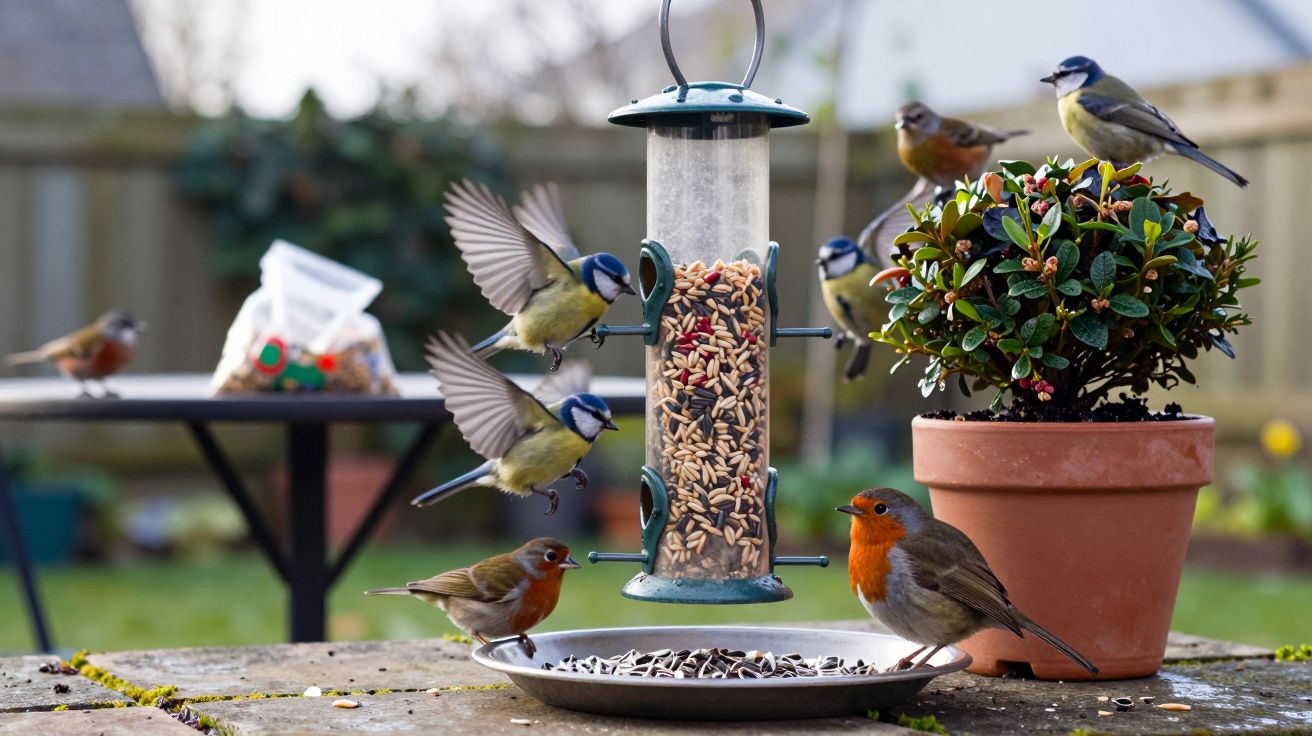
Garden birds ignoring your feeder? The seed mix mistake that puts them off their food
There’s a quiet kind of insult in hanging a brand-new feeder, filling it generously, and watching… absolutely nothing happen. No flutter of wings, no bossy sparrows, not even the local pigeon giving it a suspicious side-eye. Just a still tube of seed slowly gathering rain and regret. You start to wonder if the birds have moved house, or if you’ve somehow opened the wrong sort of restaurant.
Most of the time, the birds are still there. It’s the menu that’s putting them off.
There’s a small, boring detail that decides whether your feeder becomes a queue of blue tits or a lonely garden ornament: what’s actually in the seed mix, and how birds feel about it. Get this bit wrong, and they’ll feed two doors down. Get it right, and the same birds that ignored you last week will arrive in little, determined squabbles.
Why your feeder looks busy… and still doesn’t get used
Supermarket seed mixes are masters of illusion. The bag looks colourful and abundant, with generous photos of robins that did not, in fact, sign off on the recipe. You pour it out and it looks like proper bird food: stripes, flakes, tiny grains. The problem is that a lot of what you’re paying for is filler that small garden birds actively avoid.
Millet and wheat bulk out mixes because they’re cheap, not because tits or finches love them. Blackbirds and pigeons might have a go if the seed lands on the ground, but many small birds can’t even crack the larger grains. To them, a feeder full of wheat is like a vending machine stuffed with raw pasta.
So they do what you would do outside a café with a baffling menu: they clock it, remember, and don’t bother coming back.
The quiet villain in the bag: red millet and friends
If you tip a standard “wild bird mix” onto a tray and really look at it, you’ll see the same suspects turning up:
- Red millet
- White millet
- Cracked corn
- Whole or flaked wheat
- Grit and dust masquerading as “mixed cereals”
These ingredients aren’t evil. They’re just wrong for the customers you think you’re serving. House sparrows, chaffinches and tits mostly want oil-rich seeds that give them a fast, dense hit of energy. Millet and wheat don’t do that, especially in cold weather when every beakful has to count.
Watch a feeder carefully and you’ll see the judgement in action. A blue tit lands, pecks three or four times, flings half the contents to the ground, then leaves with one tiny sunflower chip. What looks like fussy eating is survival maths: too much effort, not enough payoff.
The result is a mess under the feeder, a lot of wasted seed, and a disheartening sense that no one appreciates the money you’ve just spent.
The mix birds actually show up for
The fix isn’t glamorous, but it’s extremely effective. Swap volume for value. Most common garden birds in the UK are keen on just a few simple things:
- Black sunflower seeds or sunflower hearts
- Peanuts (always unsalted and ideally in a mesh feeder)
- High-quality suet pellets or fat balls
- A small proportion of fine, soft seeds like kibbled maize or canary seed
Sunflower hearts are the secret cheat code. They’re de-husked, so birds don’t waste energy stripping them. They’re energy-dense, clean, and attractive to an almost ridiculous line-up: blue tits, great tits, greenfinches, goldfinches, nuthatches, robins, even the occasional starling if word gets out. Yes, they cost more per kilo than mixed seed. They also get eaten, fast, which makes them cheaper than paying for a third of a bag that ends up moulding on the lawn.
A good quality “no mess” or “no wheat” mix built around sunflower hearts might look plain compared with the stripy bargain stuff. The birds do not care. They care that every beakful pays off.
One seasoned garden watcher put it neatly: “If there’s a queue on one feeder and dust on the other, follow the queue’s menu.”
The three-day reset for a snubbed feeder
If your feeder has been ignored for weeks, you’re not cursed, you’re just on the wrong list. Here’s a simple reset that quietly rewrites your reputation in the local bird network.
1. Strip it back and clean
Empty the feeder completely. Throw old, clumped or sprouting seed into the bin, not the border; mould can harm birds. Wash the feeder in hot, soapy water or a weak disinfectant solution, rinse well and dry. This step isn’t just hygiene. A clean, fresh-smelling feeder is more inviting than something sticky and tired.
2. Change the seed, not the spot (yet)
Refill with one of the following:
- 100% sunflower hearts
- A reputable “high-energy, no-wheat” mix with hearts as the first ingredient
- In goldfinch-heavy areas, a dedicated nyjer feeder alongside, but not instead of, sunflower
Keep the feeder in the same place for at least a week so regulars can notice the change. Birds are wary of new objects, but surprisingly quick to test old objects offering new food.
3. Add a visual nudge: food on the table
For three days, scatter a tablespoon or two of the same seed on a flat surface beneath or near the feeder: a bird table, a low tray, even a wide plant pot saucer raised off the ground. Many birds feel safer trying food on an open surface before trusting a hanging pod. Once they clock that the new seed is worth it, they start using the feeder itself.
You’re essentially offering free samples at the entrance to your restaurant. After that, the queue forms itself.
Where your feeder lives matters more than you think
Even the best mix fails if the feeder feels risky. A small bird wants three things at once: food, a clear view of threats, and a quick escape route. A feeder stuck in the middle of a bare lawn offers none of that.
As you tweak the seed, quietly adjust the stage:
- Hang feeders within 2–3 metres of shrubs or a tree so birds can dive for cover
- Keep enough open space underneath that cats can’t lurk directly below
- Avoid placing feeders right next to reflective windows to reduce collision risk
- In very windy spots, choose a heavier feeder or a tray-style table to stop food swinging out of reach
You don’t need a huge garden. A balcony with one hanging feeder and a potted shrub can become rush hour territory if the mix and the layout feel kind and safe.
Small, boring habits that turn into bird traffic
Once your seed mix is sorted, the rest is repetition rather than reinvention. Birds remember which address feeds them reliably, and they pass that knowledge on in loose, chatty flocks. What you do in five quiet minutes a week builds that trust.
- Top up little and often rather than overfilling; this keeps seed fresh and reduces waste
- In wet spells, tap out soggy clumps and refill with dry seed before it cakes
- Offer water in a shallow dish, refreshed daily; thirsty birds will discover your garden even if they’re suspicious of feeders
- In winter or cold snaps, lean more heavily on sunflower hearts and suet, and ease off whole peanuts for very small birds
Think of it less as a project and more as a background rhythm: clean sometimes, check often, refill before it’s empty, and let the routine be the invitation.
A quick seed mix cheat sheet
| Seed type | Who loves it | When to use it |
|---|---|---|
| Sunflower hearts | Tits, finches, nuthatches, robins | Year-round, especially winter |
| Peanuts (unsalted) | Tits, nuthatches, great spotted woodpeckers | Autumn–winter, in mesh feeders |
| “No-wheat” mix | General small garden birds | Year-round, as core mix |
If you’ve already “tried everything”
There’s a moment, usually in late winter, when people give up. They decide their garden “just doesn’t do birds” and the feeder ends up in the shed with the broken hose no one talks about. Before you retire yours, check three things:
- Is there wheat or red millet in the bag? If yes, finish it by scattering small amounts for ground-feeding pigeons and dunnocks, then switch to a heart-heavy mix.
- Has the feeder been in the same place for at least two weeks with good seed? Constantly moving it can confuse visitors who were just starting to trust it.
- Is there food nearby that’s simply better? A neighbour’s table laden with fat balls will win every time. You don’t have to compete, but you can complement: offer hearts if they offer peanuts, or provide water if they don’t.
Most “difficult” gardens turn around with those three tweaks and a bit of patience. You’re not trying to impress an entire woodland, just reliably feed a handful of regulars. Once one blue tit decides your hearts are worth the effort, the rest generally follow.
FAQ:
- Why do my birds throw seed everywhere instead of eating it? They’re sorting through a low-quality mix to find the few bits they actually want, usually the sunflower chips. The rest ends up on the ground as waste, which looks like mess but is really a review of the recipe.
- Are the cheap supermarket mixes ever worth it? Occasionally, but only if wheat and red millet are very low on the ingredient list and oil-rich seeds come first. In practice, it’s usually better value to buy a smaller bag of a quality “no wheat” or sunflower-based mix.
- Will I only attract pigeons if I use sunflower hearts? Larger birds will eat them, but hearts are small and easy for tits and finches to grab quickly, so you’ll see a wider range of species. If pigeons dominate, use feeders with smaller perches or guardian cages that favour smaller birds.
- How long should I wait for birds to notice a new, better mix? Give it at least one to two weeks, especially if you’ve also moved or cleaned the feeder. Birds are cautious about change, but once one brave individual feeds safely, the rest usually join in.
- Is it worth feeding in summer when there’s natural food around? Yes, in moderation. Avoid whole peanuts during the nesting season, but sunflower hearts and soft foods can help busy parents and fledglings, particularly in dry spells when insects are harder to find.


Comments (0)
No comments yet. Be the first to comment!
Leave a Comment