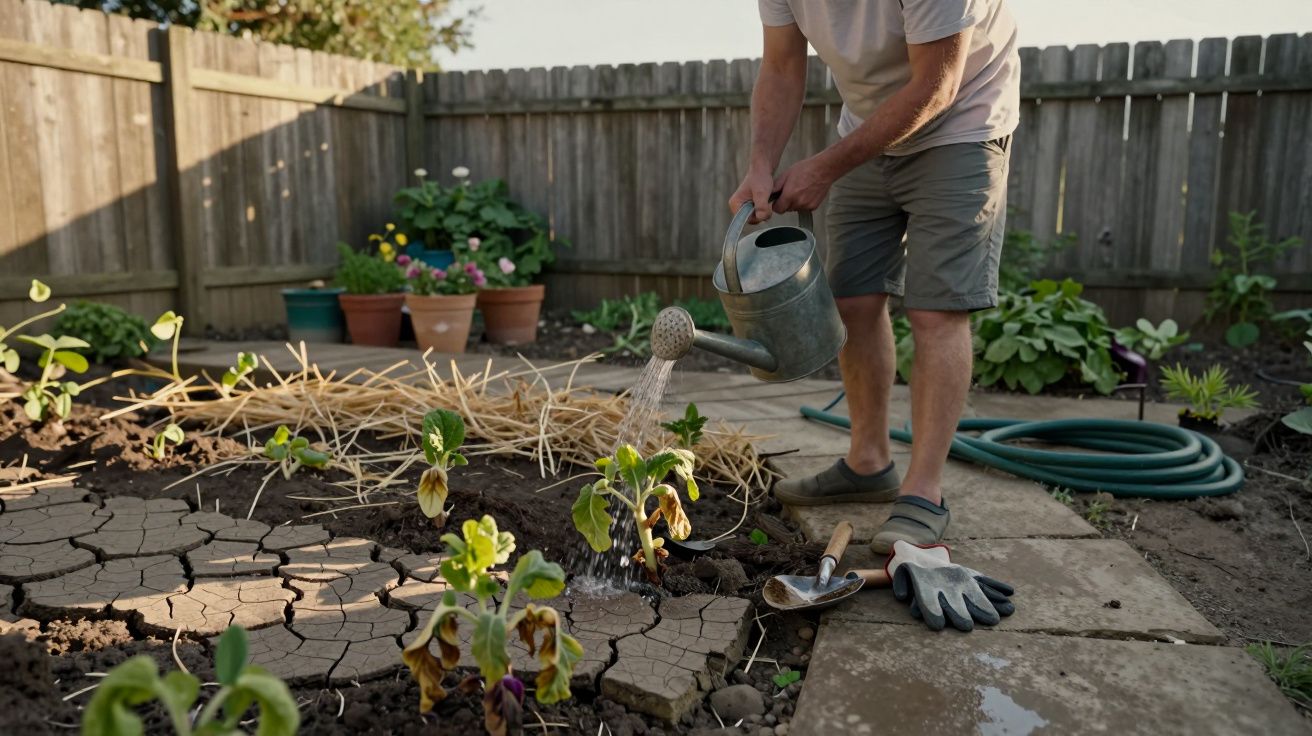
Garden soil cracking like chocolate? The watering time mistake most people make in heatwaves
From a distance, a baked garden bed can look oddly beautiful – neat, pale tiles of earth split into squares, like a snapped bar of chocolate. Up close, it’s a warning sign. Those cracks are your soil’s way of saying, “I’m empty.” Most people respond with more water, not realising that when they water in a heatwave can undo half the good they’re trying to do.
In hot spells, timing quietly becomes the most important part of your watering routine. The same amount of water, given at the wrong time of day, can vanish into thin air, leave roots gasping, and actually worsen those chocolate-bar fissures. The good news: a small shift in habit protects your soil, your plants and your water bill.
What cracked soil is really telling you
When the top layer of soil dries out hard, the particles shrink and pull away from each other, forming those wide, dramatic cracks. Clay-heavy soils do this most, but even loams and beds topped with compost will start to craze when pushed through several scorching, windy days.
As the gaps open, water poured on in a rush behaves badly. It races down the cracks instead of soaking the top layer, bypassing fine feeder roots and disappearing below reach. The surface still looks parched, the plants still droop, and you’re left wondering how yesterday’s big watering made so little difference. It’s not that you never water. It’s that the soil and the sun are playing against your timing.
Cracked soil is not just “dry.” It’s a sign that the surface structure has broken, and fast, shallow watering will slip straight through the gaps.
The timing mistake: watering when the sun is fiercest
The most common misstep in a heatwave is simple: watering in the middle of the day because that’s when the garden looks most desperate. You see limp leaves and pale soil at 2 pm, grab the hose, and give everything a generous shower under blazing sun.
Two things happen. First, a large slice of that water evaporates before it can move down into the root zone – hot air and hot soil act like a giant dehumidifier. Second, the sudden cooling of hot leaves can stress some plants further, especially if you’re using very cold tap water straight from the mains. The result is a garden that appears to perk up, then slumps again by evening.
Early morning and late evening aren’t just nicer for you; they’re kinder to the physics. Cooler air, cooler soil, and calmer wind mean more of what you pour actually soaks and stays where plants can use it. Same water, very different outcome.
Why “little and often” backfires in a heatwave
Many of us have been taught that frequent, light watering keeps plants happy. In a stretch of moderate weather, it can. During a heatwave, it often breeds shallow roots and brittle soil.
Light sprinkles only wet the top centimetre or two. Roots stay close to the surface where the moisture is, and that fine, top layer dries fastest in extreme heat. When the sun really bites, those shallow roots sit in an oven. The soil surface bakes, turns crusty, then cracks. Your plants are now more dependent on you than ever, needing almost daily top-ups just to survive.
Deep, less frequent watering flips the script. By letting water sink 15–20 cm down, you train roots to follow it into cooler, more stable layers. That deeper reservoir stays usable even when the surface looks dusty, and your soil structure holds together longer.
How to water in heatwaves so the soil actually drinks
Think “slow, deep, and cool” rather than “fast, flashy, and frantic.” A few small tweaks change everything.
- Pick your windows: Aim for before 9 am or after the sun has dropped in the evening. Morning is ideal; plants start the day hydrated and better able to handle heat.
- Water at the base, not over the top: Direct the flow to the soil around each plant, not over leaves. This reduces evaporation and disease risk.
- Use a gentle flow: A slow trickle from a can with the rose removed, a soaker hose, or a low setting on the spray gun gives soil time to absorb water instead of sending it racing down cracks.
- Count to a soak: On beds, water, pause 30–60 seconds for it to sink, then water again. On containers, water until it starts to run from the drainage holes, pause, then give a second light go.
- Check depth, not just colour: Gently dig a small hole with your finger or a hand trowel. If it’s only damp in the top 2–3 cm, keep going; you’re aiming for moisture down to at least 10–15 cm for most border plants.
These habits sound fiddly, but once you’ve done a couple of rounds, they become a calm routine rather than a scramble with the hose each scorching afternoon.
Simple fixes for soil that cracks like a chocolate bar
You can’t change your climate, but you can change how your soil behaves in it. The trick is to help it hold water longer and shrink less when it dries.
Add a protective “duvet” layer
Mulch acts like a light blanket between sun and soil. It reduces evaporation, slows temperature swings, and guards against that concrete crust.
- Use 5–8 cm of compost, well-rotted manure, wood chip, straw, or leaf mould around established plants.
- Keep mulch a small distance from stems and trunks to avoid rot.
- Top up once or twice a year; it slowly feeds the soil as well.
Improve the soil’s sponge over time
Organic matter makes soil more like a sponge and less like a brittle biscuit. Even a couple of annual additions change how it cracks and drinks.
- Fork in compost or soil improver in spring or autumn, focusing on beds that bake hardest.
- In veg plots, follow hungry crops (tomatoes, brassicas) with green manures or compost-rich mulches.
- Avoid constant heavy digging in clay; it can break down structure. Light forking and surface mulches are often enough.
Rethink containers in extreme heat
Pots are the first to suffer, and the first to be blamed. A few tweaks reduce how often their soil goes from damp to desert.
- Use larger pots where possible; small volumes dry fast.
- Mix in water-retaining gel or extra composted bark to hold moisture.
- Cluster containers together in hot spells to shade each other’s sides.
- Move the thirstiest ones out of full midday sun if you can.
When to break the “no midday watering” rule
There are exceptions. Newly planted trees, very young seedlings, and plants already on the edge may need emergency help regardless of the clock. If a plant is visibly collapsing in the heat, leaving it until evening can mean losing it.
In those cases, water low and slow at the base only, using lukewarm water if possible. Shade cloth, an umbrella, or even a propped-up cardboard sheet can give temporary relief while the roots recover. Think of it as first aid, not your everyday plan.
A quick reference: better vs worse habits in heatwaves
| Habit | Better for soil and plants | Risky in heatwaves |
|---|---|---|
| Time of day | Early morning / late evening | Midday, full sun |
| Style | Deep, infrequent soak | Quick, daily sprinkle |
| Target | Soil at base of plant | Leaves and bare paths |
| Soil care | Mulch + organic matter | Bare, compacted soil |
Where this leaves heatwave gardeners
Those chocolate-like cracks aren’t a moral failing; they’re feedback. Your soil is telling you that water is arriving at the wrong time, too fast, or with too little help from structure and shade. You don’t have to overhaul the entire garden to respond.
Shift your watering to the cool ends of the day. Swap hurried sprinkles for slower, deeper soaks. Give the soil a light duvet of mulch and a little organic matter whenever you can. These are small, quiet changes, but they turn your beds from brittle bars of chocolate back into something closer to a sponge – ready to hold onto every precious drop the next time the heat rolls in.
FAQ:
- Is it ever worth using sprinklers in a heatwave? In strict hosepipe-ban-free situations, sprinklers can help lawns if run early in the morning for a deep soak. Avoid using them at midday or on beds where foliage will stay damp into the night, which can invite disease.
- My soil is sandy, not clay, but still dries fast. Is the advice the same? Yes, with extra emphasis on organic matter and mulch. Sandy soils don’t crack as dramatically but lose water quickly; deep watering and mulching make the biggest difference.
- Can I rely on self-watering spikes and bottles in extreme heat? They can help container plants as a backup, but don’t assume they’re enough in a heatwave. Check the soil with your finger; if it’s dry below the top couple of centimetres, you’ll still need to water.
- Do brown lawns need watering every day in hot weather? In the UK, most established lawns will bounce back from going brown and don’t need daily watering. If you choose to water, do it deeply once or twice a week in the early morning, not with frequent light sprinkles.




Comments (0)
No comments yet. Be the first to comment!
Leave a Comment