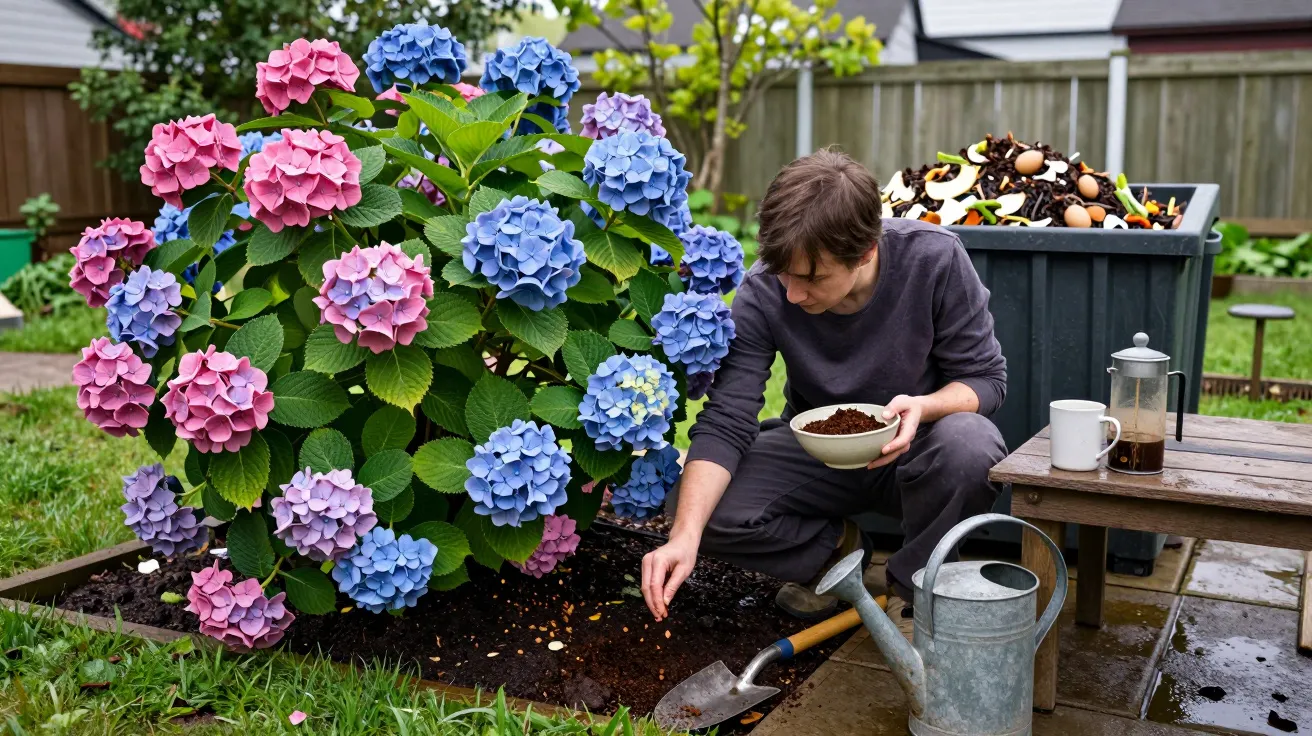
Gardeners are divided over this coffee ground trick for hydrangeas – some call it magic, others nonsense
On a damp Saturday in late spring, the conversations at garden gates sound oddly similar. Someone is talking about slugs, someone else about blossom that never quite appeared, and sooner or later a neighbour will lean in and say: “You know, I just tip my coffee grounds under the hydrangeas. Turns them blue. Works a treat.” The claim travels from allotment path to online forum, gathering certainty as it goes.
Yet for every gardener who swears blind their pale pink mophead turned a deep seaside blue after a winter of espresso dregs, another rolls their eyes and calls it gardening folklore. Somewhere between those two benches of opinion lies the truth: coffee grounds can play a role in how hydrangeas behave, but not in the quick, magical way the myth suggests.
Where the coffee-ground idea comes from
The story leans on a real quirk of hydrangeas. On certain varieties, the flower colour changes with soil conditions. Acidic, aluminium‑rich soils push blooms towards blue; more alkaline ground nudges them pink. Coffee is often labelled as “acidic”, so the leap is easy: add grounds, lower the pH, job done.
There is also the comforting appeal of using what is already to hand. A cafetière emptied into a flowerbed feels thrifty and faintly clever. You avoid the bin, you “feed” the plant, and if the neighbours notice deeper tones in your hydrangea, the coffee line makes a neat little story. The problem is that gardening rarely obeys neat stories.
Coffee grounds do contain nutrients and have an effect on soil structure, but they are not a fast-acting colour switch, and they can do harm used carelessly.
What the coffee trick actually promises
In its most optimistic version, the trick promises three things at once: richer blue flowers, healthier growth and fewer slugs. The reasoning goes that grounds are acidic, nitrogen‑rich and slightly abrasive. Toss enough around the base, and you supposedly create a mini forcefield that improves colour while deterring pests.
Some gardeners report real, visible changes after a year or two of regular sprinkling. Others see nothing but a slightly crusted surface and the odd mould patch. Hydrangeas are slow to respond, and many other variables are in play: existing soil pH, aluminium availability, pot versus ground, even the variety itself. Not all hydrangeas can turn blue, whatever you do to the soil.
The coffee myth succeeds because it is simple, and because every garden has at least one example of a plant that thrived after some random experiment. One recovered cutting becomes a story we repeat for years. Hydrangea colour, however, is more chemistry than coincidence.
How hydrangea colour really works
For bigleaf hydrangeas (Hydrangea macrophylla) and a few close cousins, the pigments in the petals react with aluminium compounds in the soil solution. When aluminium is available and the soil leans acidic, the flowers shift blue. When aluminium is locked up in more alkaline ground, the blooms trend pink to red. White hydrangeas ignore this game and mostly stay white.
Soil pH is only part of the picture. You can have quite acidic soil with little free aluminium, or neutral soil with ample aluminium in a form roots can’t take up. Containers are easier to tweak than long‑established borders, where underlying geology and old amendments have the final word. This is why one side of a hedge can blaze blue and the other blush pink, despite being only a few metres apart.
The crucial point: coffee grounds alone rarely shift soil pH enough to override your base conditions, especially in open ground. They are a nudge, not a lever.
How to use coffee grounds without upsetting your hydrangeas
If you like the low‑waste idea and want to try it anyway, you can fold coffee grounds into a broader, slower strategy. Think of them as one ingredient in the compost bowl rather than a pure, magical feed sprinkled neat.
- Let used grounds dry a little in an open tray to stop them matting and going slimy.
- Add them to your compost heap or wormery at no more than about 15–20% of the mix.
- For containers, mix a modest amount of well‑rotted compost that happens to include coffee, rather than laying grounds directly on the surface.
- On beds, lightly fork a thin scattering into the top few centimetres of soil, instead of forming a dark “mulch cap”.
This approach spreads any acidity and nitrogen more gently, reduces the risk of a water‑repellent crust and avoids drawing every neighbourhood cat with the smell. The hydrangea benefits from the overall improvement in organic matter, even if the coffee itself is only a minor player.
When the trick may help – and when it will not
Coffee grounds have a better chance of contributing to a colour shift in specific situations. Potted hydrangeas grown in a peat‑free, slightly alkaline mix are quite responsive to gentle acidifying inputs. Combined with a specialist “blue hydrangea” fertiliser that adds aluminium sulphate, your saved grounds can complement the main act.
In a heavy clay border over chalk, however, a year’s worth of cafetières will barely dent the underlying alkalinity. You may get lusher green growth from the extra organic matter, but expecting a candy‑pink shrub to turn cobalt is likely to end in disappointment. No amount of espresso will override the bedrock.
There is also the simple reality of genetics. Some modern varieties are bred to stay firmly in one colour family, with very little movement even under lab‑like conditions. Before you start rationing your morning coffee to your shrub, check the plant label or nursery notes. You may be negotiating with a plant that has no intention of changing its wardrobe.
Risks and side effects gardeners rarely mention
Used thoughtlessly, coffee grounds come with a list of small but real drawbacks. The fine particles can bind together when laid thickly, forming a dense layer that sheds water rather than soaking it in. On potted hydrangeas, this can dry out the root zone just when you are trying to keep them evenly moist.
Fresh grounds also contain caffeine and compounds that, in high doses, can inhibit seedling growth and bother soil life. Worms tolerate moderate amounts blended into compost, but a regular coffee “lid” dumped in one spot every few days is not a recipe for a thriving ecosystem. Fungi love that rich, wet layer, and not always the kinds you want in confined pots.
Then there is the pest question. Some swear their slug damage dropped after they started scattering grounds. Trials are patchy. In damp British gardens, a single downpour dilutes any surface caffeine, and persistent slugs will simply skirt or cross the barrier. Relying on coffee alone as a defence is optimistic at best.
What to do instead if you really want blue hydrangeas
If your heart is set on clear blue heads rather than muddled mauve, you will get more predictable results with straightforward measures. Think chemistry, not kitchen waste.
- Choose a variety known to colour‑shift, such as a classic Hydrangea macrophylla.
- Grow it in a large container filled with ericaceous compost if your garden soil is alkaline.
- Use a fertiliser labelled for blue hydrangeas that includes aluminium salts, following the packet with some discipline.
- Water with rainwater where possible, as hard tap water slowly drifts the pH upwards.
In a border on neutral to slightly acidic soil, you can top‑dress annually with ericaceous compost and, if needed, apply aluminium sulphate in spring and early summer. Test the soil before you begin, so you know whether you are coaxing a near‑blue into deeper shades or asking the impossible from chalky ground. Coffee grounds, if you wish, can still join the compost heap as supporting cast.
A quick comparison at a glance
| Approach | Best for | Main limitation |
|---|---|---|
| Coffee grounds in compost | Slow soil improvement, low waste | Colour change uncertain, slow |
| Ericaceous compost | Pots and mildly alkaline borders | Needs repeating, costs more |
| Aluminium sulphate feed | Strong, deliberate blue tones | Must be measured and monitored |
A small ritual, not a miracle cure
There is something quietly pleasing about rinsing out the cafetière and knowing the dregs will end up under a shrub rather than in the bin. The act makes you pay attention to the plant, to its leaves and buds and the feel of the soil under your fingers. Many of the gardeners who say “coffee works” are also the ones who water properly, mulch in time and prune with care. The grounds may be a mascot for the real work rather than the cause of the result.
You do not have to pick a camp between “magic” and “nonsense”. Coffee grounds are neither. Used lightly, folded into compost and common sense, they are another way of returning something gentle to the soil. On their own, tipped straight from mug to pot, they are more likely to colour your conscience than your hydrangeas.
FAQ:
- Will coffee grounds turn my pink hydrangea blue by themselves? Not reliably. They may contribute slightly in pots on already suitable soil, but you usually need acidic compost and an aluminium‑rich fertiliser for a noticeable shift.
- Can I just mulch thickly with used coffee grounds? It is better not to. A thick layer can compact, repel water and encourage mould. Mix grounds into compost or soil instead, and keep the amounts moderate.
- Are coffee grounds safe for all plants? In small quantities blended through compost, generally yes. Some seedlings and delicate plants dislike heavy doses, so avoid dumping large amounts in one spot.
- Do coffee grounds really stop slugs around hydrangeas? Evidence is mixed. Any deterrent effect is usually short‑lived in wet weather. Treat coffee as a minor help at best, and use other slug controls alongside it.
- If I do not drink coffee, is there an alternative? For lowering pH, look to ericaceous compost, pine needle mulch or sulphur‑based soil amendments. For organic matter, ordinary homemade compost is as useful as anything from the cafetière.




Comments (0)
No comments yet. Be the first to comment!
Leave a Comment