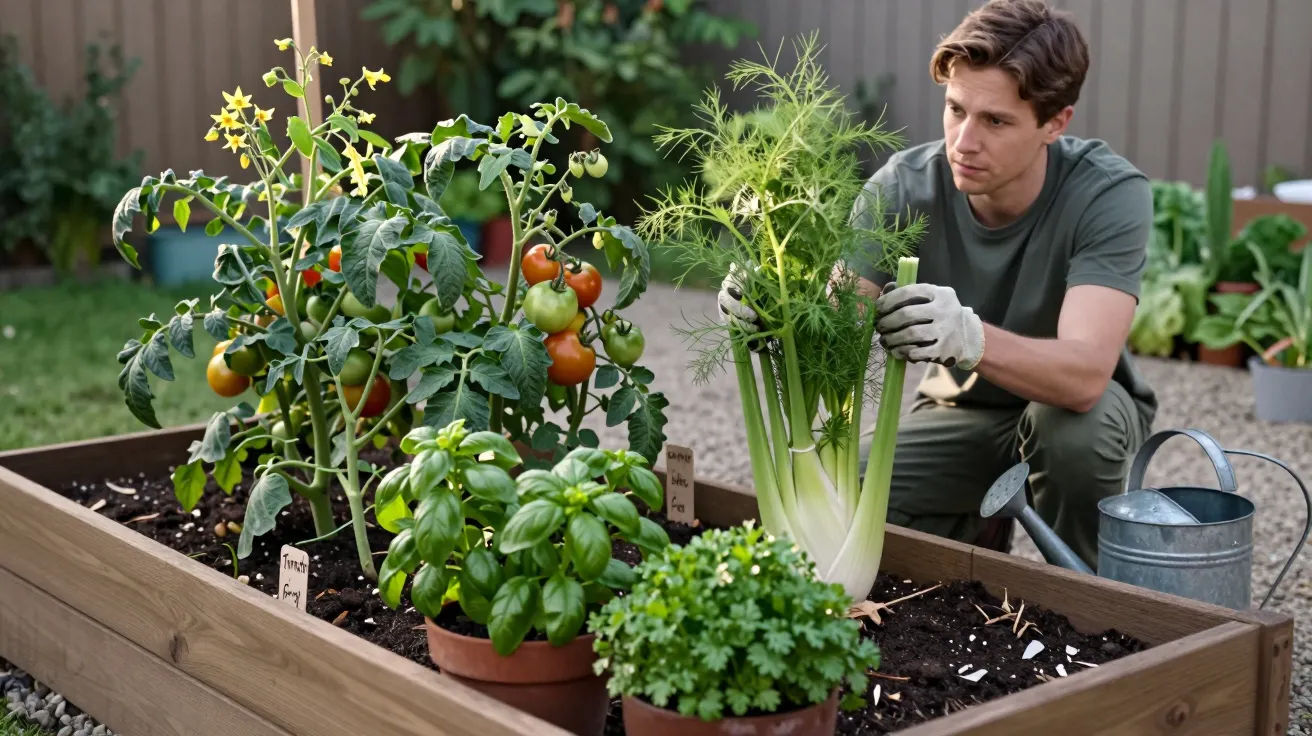
Gardeners reveal the one herb you should never plant next to your tomatoes if you want a good harvest
The mistake often starts with good intentions. You tuck a few herb seedlings around your tomato plants, picturing a Mediterranean kitchen garden: basil, oregano, maybe a clump of fragrant fennel for that soft, feathery look. A month later the tomatoes sulk, the flowers drop, and the fennel looks smug. You water more, you feed more, you blame the weather. The problem is standing right next to your plants.
In almost every gardening group, there’s one question that comes back as regularly as slugs after rain: “Which herbs can I plant with my tomatoes?” Seasoned growers will give you a list of companions-and then they’ll lean in and add a quiet warning. There is one herb they all agree should never share a bed with your tomatoes if you care about yield.
The one herb to keep away from your tomatoes
That herb is fennel. Not Florence fennel (the bulb) in a polite row at the other end of the plot, not a stray seedling that popped up from last year’s salad. The real trouble starts when fennel is allowed to grow right in with your tomatoes, roots and all, in the same patch of soil.
Fennel is what gardeners call an “allelopathic” plant. It releases chemicals from its roots and decaying leaves that quietly interfere with its neighbours. To fennel, this is smart survival strategy. To tomatoes, it is like being asked to run a marathon while someone slowly turns down the oxygen. Growth slows, leaves look off-colour, flowers fail to set fruit as they should.
You may not see a dramatic collapse. That is what makes fennel such a sneaky neighbour. You simply end up with fewer trusses of fruit, more blossom drop, and plants that never quite reach their potential. Put those same tomato varieties two beds away from fennel, and they suddenly remember how to thrive.
“If my students ignore every other bit of companion planting advice, I just ask them for one thing: don’t tuck fennel in with your tomatoes,” says Claire H., a market gardener in Kent. “It’s like hosting a dinner party and inviting someone who quietly turns off the music and eats half the food.”
Why fennel and tomatoes clash in the same bed
Tomatoes are hungry, thirsty, and sociable. Their roots like company that shares, not steals. Fennel is the opposite: independent, assertive, and armed with its own chemical toolkit. Those root exudates-tiny chemical signals seeping into the soil-can stunt or twist the growth of some plants, tomatoes included.
Below the surface, the fight is mostly invisible. Fennel’s deep, fibrous roots can outcompete tomato roots for moisture and nutrients in the top layers of soil. Above ground, its tall, airy foliage may look light and harmless, but it subtly shifts wind and light patterns. Tomatoes respond best to steady warmth and even airflow; a big fennel clump can trap damp air around lower leaves, making fungal problems more likely.
Then there’s the insect angle. Tomatoes benefit from hoverflies, bees, and predatory wasps, all of which also adore fennel flowers. That sounds ideal until you realise fennel often blooms just as tomatoes need consistent pollination. In cramped beds, pollinators may spend more time at fennel’s buffet and less time brushing tomato flowers, especially under cover. Fewer visits can quietly cut your harvest.
What to plant near tomatoes instead
You don’t need a bare bed around your tomato stems. You just need the right neighbours. Think of tomatoes as slightly demanding but generous hosts: give them light, airflow, and non-competitive companions, and they repay you in bowls of fruit.
Herbs that tend to work with tomatoes rather than against them include:
- Basil – The classic companion. Compact, shallow-rooted, happy in the same warm, moist soil. Many gardeners swear the flavour of both improves when grown together.
- Parsley – Tolerates partial shade under tomato foliage and fills gaps, helping to shade soil and keep moisture steady.
- Chives – Their sulphurous scent can make life harder for aphids and may deter some browsing pests.
- Oregano and marjoram – Sprawling but not aggressive. They knit lightly over the soil and attract beneficial insects without bullying the tomatoes.
Little touches help. Keep low-growing herbs at the sunny edges of the bed so tomato stems still breathe. Avoid woody, thirsty herbs like rosemary right at the base of your tomatoes; they simply want drier soil. If in doubt, plant strong-flavoured herbs in their own pot and move them close to the tomatoes, rather than into the same soil.
Here’s a tiny spacing checklist you can screenshot:
- Leave a clear 20–30 cm ring around each tomato stem for airflow.
- Plant basil and parsley on the sunny side of the tomato row.
- Use chives or marjoram as edge plants, not in the middle of the bed.
- Keep fennel, dill, and other tall umbellifers in a separate patch or large pot.
- Rotate tomato beds yearly so no fennel debris from last year lingers in the soil.
Where fennel can live happily
Fennel isn’t a villain; it is just not a good flatmate for tomatoes. Grown in the right place, it’s a star: statuesque, fragrant, and beloved by pollinators. You simply want a polite distance between it and your solanums.
Plant fennel:
- In a dedicated herb or pollinator bed, at least one full bed or path away from your tomatoes.
- Along a fence or back border, where height is an asset and root competition won’t bother hungry crops.
- In a large container, if you have a small garden or balcony. This keeps its roots and allelopathic chemicals contained.
If you grow Florence fennel for the bulb, treat it as a main crop in its own row, like beetroot or leeks. Harvest the bulbs cleanly, remove the residue, and don’t follow that exact strip with tomatoes the very next season. Give it at least a year’s gap or plant a leafy crop in between to dilute any lingering effects in the soil.
“Fennel is brilliant in the right spot,” says an allotmenteer in Manchester. “It’s just not invited to my tomato party. I park it three plots down with the bee plants and everyone’s happy.”
The sciencey bit you can see in your harvest
Gardeners noticed long before scientists named it: some plants cast a shadow in the soil. Allelopathy is simply the label for those chemical whispers between roots. Fennel is particularly chatty. Compounds it releases can affect seed germination, root elongation, and the way nearby plants take up nutrients. Tomatoes happen to be among the more sensitive guests.
You don’t need a lab to prove the point. Plant the same tomato variety in two tubs of similar compost. Tuck a fennel plant into one tub and a basil plant into the other. Keep water and feed equal. Over a summer, note height, leaf colour, and fruit set. Most home gardeners see the fennel-sharing tomato lag behind, with fewer trusses and a generally tired look. Once you see it, you tend to keep fennel on its own patch forever.
| Key point | Detail | Why it matters for your crop |
|---|---|---|
| Fennel is allelopathic | Root chemicals quietly stunt sensitive neighbours | Tomatoes nearby grow slower and yield less fruit |
| Tomatoes are heavy feeders | They hate root competition and chemical stress | Clear soil around roots gives stronger plants |
| Better herb companions exist | Basil, chives, parsley, oregano play nicely | You still get a lush, useful herb layer without sacrificing harvests |
FAQ:
- Can I grow fennel and tomatoes in the same garden at all? Yes. Just avoid the same bed or container. A distance of one bed, one path, or separate pots is usually enough.
- Is dill as bad as fennel for tomatoes? Dill is related and can also be competitive when crowded in, but fennel is the main allelopathic culprit. If space is tight, keep dill in its own clump or pot as well.
- What are the signs my tomatoes are unhappy next to fennel? Slower growth, smaller plants than in other beds, fewer flowers setting fruit, and a generally lacklustre harvest despite decent care.
- Can I fix the problem if they’re already planted together? You can. Carefully lift and move either the fennel or the tomatoes to a new spot with fresh compost. Water well, shade for a few days, and they often recover.
- Does this apply in containers and growbags too? Yes, even more so. In confined soil, root competition and chemical effects are concentrated. Keep fennel out of tomato pots and growbags entirely.




Comments (0)
No comments yet. Be the first to comment!
Leave a Comment