Many people rinse this food down the sink – plumbers warn it’s the number one cause of winter blockages
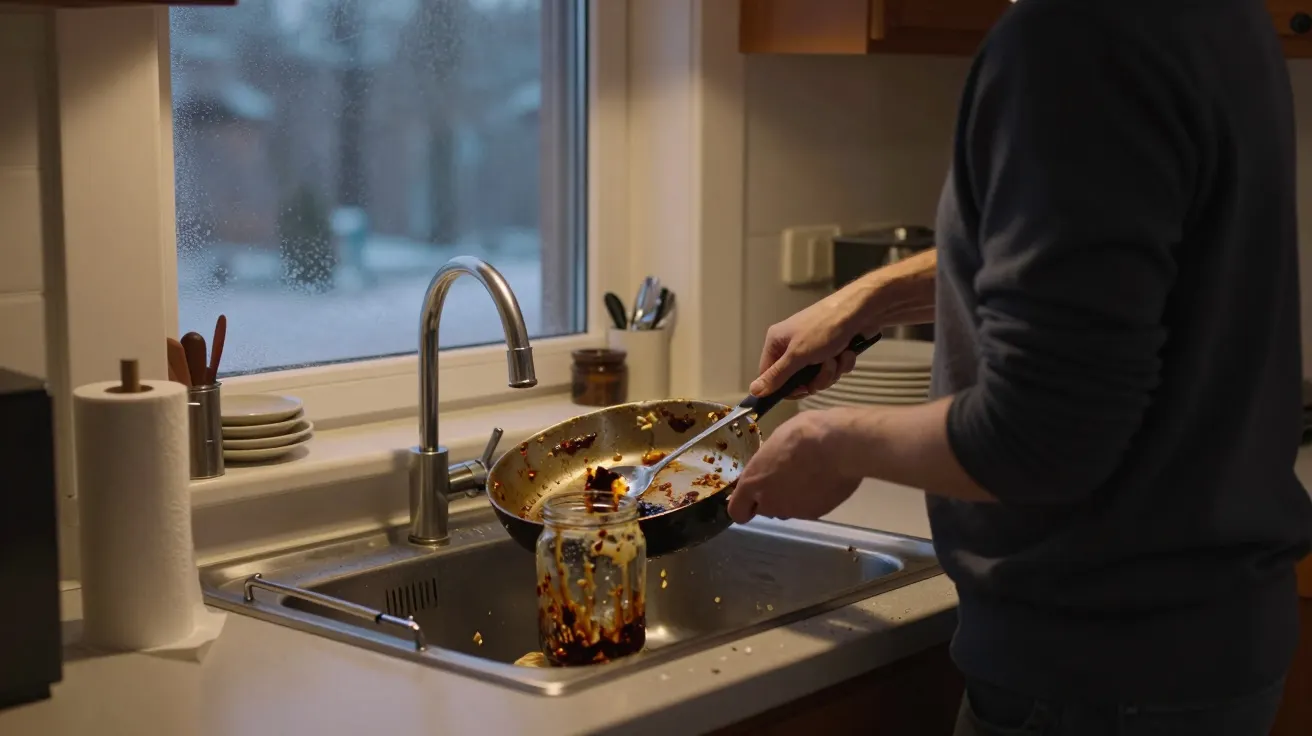
On a cold Tuesday night, the washing-up water was steaming, the radiators were just about winning, and the roast pan looked like a crime scene. Laura tilted it over the sink, ran the hot tap, and watched the cloudy water carry off the last streaks of gravy and fat. The plates stacked, the kitchen looked respectable again. She didn’t know that, somewhere under the paving slabs outside, those few seconds had just glued themselves to everybody else’s bad habits.
A week later, her kitchen sink gurgled, coughed, and stopped draining altogether. The plumber only needed one look and a quick plunge to diagnose it. “Cooking oil and fat,” he said, rinsing his hands. “This stuff is winter’s favourite way of blocking pipes. You’re far from the only one.”
The ‘invisible’ problem hiding in your sink
We like to believe that if something is liquid when it leaves the pan, it will stay liquid all the way to the treatment works. Hot tap on, a bit of washing-up liquid, problem solved. It feels clean, and the water disappears, so the brain files it under “sorted”.
The trouble is that pipes do not live in your cosy kitchen. Outside, they are cold, narrow and already lined with a thin film of whatever has gone before. As temperatures drop, oils, butters and meat fats cool down, turn sticky, and then solid. What looked like soup becomes glue.
Plumbers describe winter as “fatberg season”. The calls come in waves after Sunday roasts, Christmas dinners and fry-ups on dark mornings. It is rarely one dramatic pour of fat that causes the issue. It is the quiet, regular rinsing of “just this bit” that builds a plug.
The food you’re most likely to rinse away without thinking – cooking fat and grease – is the one doing the most damage once the pipes get cold.
The main culprits: more than just “a bit of oil”
When people hear “fat”, they tend to think of a leftover deep-fat fryer or a jar of lard. In practice, UK plumbers see the same, very ordinary foods turning into winter blockages again and again.
Everyday offenders that look harmless in the moment
- Roast meat juices and tray drippings – the golden layer left in the tin after roast chicken, lamb or beef.
- Bacon and sausage fat – the glossy puddle from a frying pan, especially after a full English.
- Butter and margarine residues – melted on vegetables, toast, or in baking tins.
- Cooking oils – sunflower, olive, rapeseed and goose fat used for roast potatoes and chips.
- Creamy sauces and gravies – particularly those thickened with butter, cream or meat juices.
Each on its own seems trivial. You tip a little down, flush with hot water, and the pipe accepts it. The issue is that oil and fat cling. They line the pipe walls in a thin layer, catching food particles: coffee grounds, rice, pasta, eggshell fragments. Over time, the pipe’s diameter quietly shrinks.
Water still drains, until one cold snap tips the balance. Then the blockage makes itself known in the least poetic ways: slow sinks, gurgling sounds, and a smell that no scented candle will quite drown out.
Why winter makes everything worse
In July, a warm soil temperature and higher water usage give pipes a little more forgiveness. In December, that mercy disappears. The physics is simple and unforgiving.
Colder pipes mean grease solidifies faster. The hot water you run for a minute or two at the sink cools rapidly once it leaves your kitchen, and the fat it carries settles further down the system, often where you can’t reach it with a plunger. What solidifies there does not politely move along.
At the same time, winter brings richer meals and more of them. Sunday lunches multiply, Christmas and New Year pile on extra trays and pans, and people cook at home more often. The system is under heavier load with material that is more likely to stick. Your “one-off” is everyone’s “one-off”.
Water companies see this on a large scale. Those famous “fatbergs” in sewers are an unpleasant combination of household grease and things that should never be flushed. The same chemistry happens in the small run of pipe under your patio. It just ruins your evening instead of making the news.
What plumbers wish you’d do instead
The good news is that preventing winter fat blockages is mostly about small, boring changes. None of them will look impressive on social media, but they will save you a call-out when the weather is miserable and the sink is full.
Simple swaps in the kitchen
- Let fat cool and solidify in the pan. Scrape it into the bin, not the sink. A bit of kitchen roll can mop up the film that remains.
- Pour liquid oils into a container – an old jar, tin or bottle – and bin it when full. Some areas even offer cooking oil recycling points.
- Use a sink strainer to catch food scraps, coffee grounds and rice before they sneak into the pipes.
- Wipe plates with a piece of paper towel before washing if they are particularly greasy. It feels fussy; it pays off.
- Run hot water only after the fat is gone, not to “push it through”. Hot water hides the problem; it does not solve it.
These habits are not about perfection. They are about changing the default from “down the sink” to “in the bin” for anything that would turn solid on a cold plate.
If your sink is already sulking
Sometimes we learn the hard way. The water starts to pool, the plughole burps, and the smell hints that something is decomposing in the dark. Before you panic, there are a few steps you can try – and a few you should resist.
What to try (and what to avoid)
- Try a plunger first. A proper sink plunger, used with a little patience, can shift minor blockages sitting close to the plughole.
- Use very hot (not boiling) water with washing-up liquid as a one-off to disperse minor grease films. Do this only after scraping away current fat sources.
- Avoid tipping caustic drain cleaners in repeatedly. They can damage older pipes, are harsh on the environment, and often just move the problem further along.
- Do not poke coat hangers or sharp tools down the pipe. Scratched pipes hold grease more easily, and you can make a bad problem worse.
If the blockage keeps returning, or you see water backing up into other fixtures, it is time to call a professional. Persistent fat build-up can sit several metres away from your sink and needs proper equipment to clear safely.
Myths that keep pipes clogged
We inherit kitchen habits from parents, housemates and the general hum of “everyone does it”. Some of those habits age badly when faced with modern plumbing and winter weather.
| Myth | Reality |
|---|---|
| Hot water and washing-up liquid dissolve fat so it’s fine to pour it away. | They only keep fat liquid for a short distance. Once cooled, it sticks again further down. |
| “It’s just vegetable oil, that’s healthy, so it won’t clog.” | Healthiness for arteries does not apply to pipes. All cooking oils congeal and coat pipe walls in the cold. |
| A bit of fat won’t hurt if you run the tap long enough. | Repetition is the issue. Small amounts, often, build the same block as one large pour. |
How to think about it differently
It helps to shift the story in your head. Instead of seeing fat as “waste water with flavour”, treat it as you would candle wax. You would not melt a candle and pour it down the sink expecting it to behave. You would let it cool and bin it. Cooking fat deserves the same suspicion.
You are not only protecting your own pipes either. In flats and terraces, a single bad habit can trigger problems for neighbours who have never roasted a potato in their life. The pipes are shared; the responsibility, awkwardly, is too.
For households on a budget, there is also a financial angle. Emergency call-out fees on a Sunday night, replacement pipework, and cleaning up after an overflow cost more than a box of bin liners and an old jam jar kept under the sink. Prevention is not glamorous, but it is cheaper.
What to remember this winter
You do not need to become the perfect person who never lets a drop of oil near the drain. Most plumbers would settle for “much less, most of the time”. Scrape, wipe, collect, and only then wash.
The tiny decisions made after dinner, in a steamy kitchen when you are tired, are the ones that keep your pipes clear in February. Next time you tilt the pan and hear the water hiss, imagine the inside of the pipe outside your house instead of the convenience of your sink. Then reach for the jar, not the plughole.

Comments (0)
No comments yet. Be the first to comment!
Leave a Comment