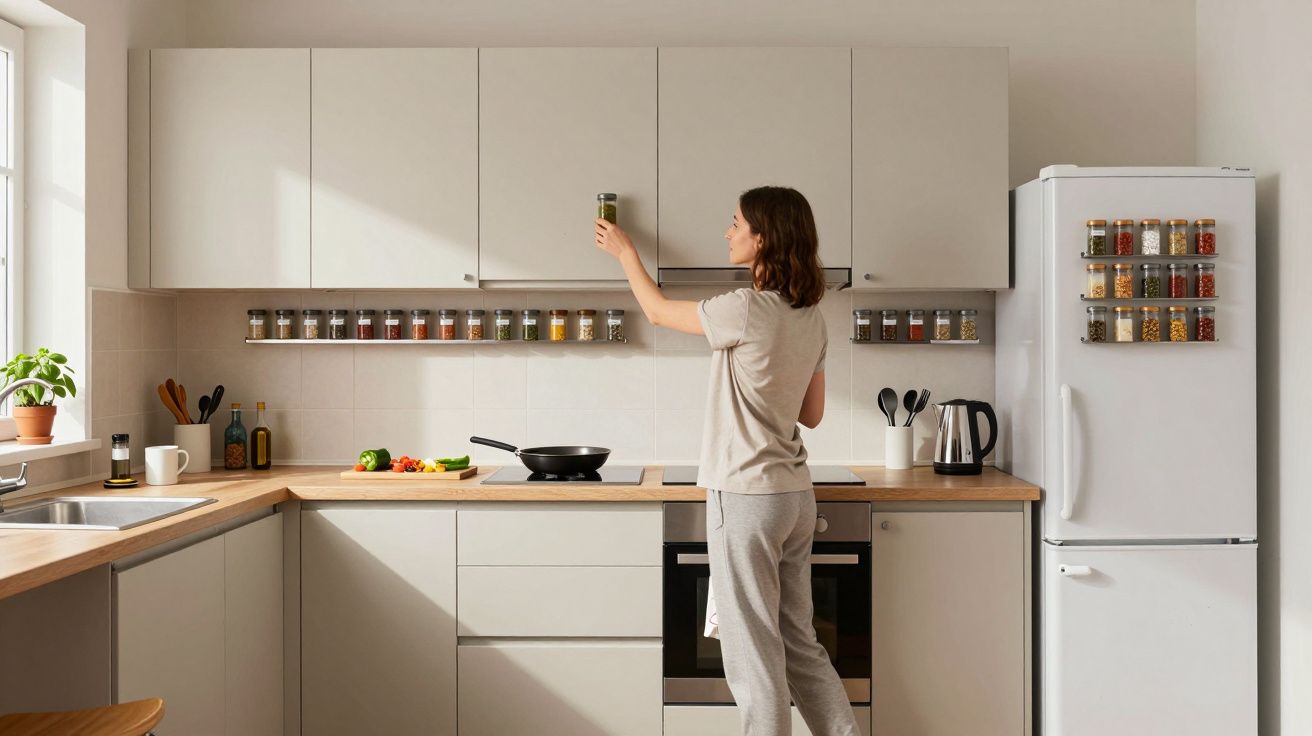
No drill, no nails: the rental‑safe spice rack hack that doubles a tiny kitchen’s storage
In a cramped rental kitchen, every centimetre counts. Worktops disappear under jars, drawers choke on sachets, and one hard turn of a pan can send paprika flying. Yet most of the best storage spots in a small kitchen sit unused: the sides of cupboards, the inside of doors, the dead space between worktop and wall units. With a handful of rental‑safe tricks, those “nothing” zones become a full spice larder - without a drill, a screw or a stern email from the landlord.
What follows is less about buying a single clever gadget and more about stacking several light hacks together. Each one seems tiny in isolation. Together, they can feel like someone secretly doubled your cupboards overnight.
The core idea: put the metal on the jar, not the wall
Magnetic spice racks are everywhere online, but most rely on screwing a strip into tiles or cabinet sides. That’s a no‑go in many rentals. The workaround flips the logic: make the jars themselves magnetic, then attach them to surfaces that already accept magnets or can safely host a removable metal strip.
You can:
- Stick slim metal plates or strips with strong removable adhesive to the underside of wall units or the sides of the fridge.
- Add small self‑adhesive metal discs to the lids or bases of your spice jars.
- Use low‑profile neodymium magnets on the opposite surface so jars “click” into place, then release with a twist.
The trick is to marry light jars with light hardware so everything holds firmly, then peels off clean when you leave - no tiles cracked, no paint pulled.
Once you stop thinking of spices as objects that must stand on a shelf, any flat plane in your kitchen becomes potential storage. The space under cupboards, the blank strip above the hob splashback, even the side of the washing machine can carry a neat, removable spice grid.
Where to put it: turning dead zones into storage
Most small kitchens share the same forgotten areas. Map them before you buy a single hook or rail.
High, low, and in between
Look for:
- Under‑cabinet undersides: often bare, smooth and perfectly placed above the worktop.
- Cupboard sides: internal and external, especially end cupboards near the cooker.
- The fridge flank: prime real estate for jars if it’s not boxed in.
- Inside doors: pantry or tall cupboard doors can host shallow racks without clashing.
- The splashback gap: the 5–10 cm between worktop and wall units often sits empty.
A simple pattern works well: spices you reach for multiple times a day (salt, pepper, chilli, garlic, mixed herbs) go at eye or hand height, in the “hot zone” above your main prep space. Rare blends can live higher up or further away.
Check clearances before you commit
Before sticking anything:
- Open every relevant cupboard door to full angle.
- Mimic whisking, stirring and lifting pans to see where your arms actually move.
- Mark likely rack zones with low‑tack tape for a day to ensure nothing bangs or snags.
That five‑minute rehearsal prevents the classic mistake: a beautiful spice display you end up avoiding because it knocks the cupboard every time you make tea.
The no‑holes hardware that actually works
Removable storage stands or falls on its fixings. Choose badly and you either pull off paint or watch your jars slide down the wall at midnight. Three families of hardware cover most situations.
Adhesive strips and hooks
Modern removable strips and hooks are designed to release cleanly from paint and tiles when you pull the tab straight down. Look for:
- Strips rated for at least twice the weight of what you’re hanging.
- Flat, wide contact areas on the accessory (rails, plates, tiny shelves).
- Clear instructions about curing time - many need 24 hours before you load them.
Common uses:
- A shallow spice rail on the inside of a cupboard door.
- A lightweight bar under a wall unit to hang spice clip rings.
- A slim metal strip on tiles above the hob.
Stick on a clean, dry, degreased surface, press firmly, then ignore it till tomorrow. Patience prevents failures.
Magnetic plates and discs
If the surface already takes magnets - like the side of a fridge - you simply magnetise the jars and skip adhesives. Where it doesn’t, you add a metal “bridge”:
- Stick a thin metal plate or strip to tiles or cabinet sides using removable adhesive strips.
- Attach small metal discs to jar lids or bases (many spice jars have steel lids already; a magnet will tell you).
- Use neodymium magnets only where needed - for example, glued inside a wooden rail or behind a decorative bar.
This keeps the heavy lifting (and potential paint interaction) on the cheap plate, not the wall. When you move out, the plate and strips come away together.
Tension rods and freestanding units
In some layouts, you can dodge walls altogether.
- A tension rod between two cupboards can hold S‑hooks and spice baskets.
- A slim freestanding rack wedges between worktop and wall units, using friction rather than fixings.
- Stackable risers inside cupboards double shelf height for spice jars without touching the walls.
These options are useful where tiles are uneven or paint is fragile. They also travel easily to your next kitchen.
Build a system, not a jumble of jars
A rental‑safe rack is only half the story. The other half is whether you can actually find the cumin in ten seconds when the onions start to catch.
One jar size, clear labels, strict zones
Aim for:
- Consistent containers: choose one or two jar sizes that fit your rack depth so everything sits flush.
- Front‑facing labels: either on the lid for under‑cabinet storage, or on the side for vertical rails.
- Logical grouping: core cooking spices together, baking spices in another block, speciality blends at the edge.
A simple positioning rule helps: workhorses at your dominant‑hand side, height arranged from “used daily” at eye level to “occasional” high or low.
A quick “decant and reset” ritual
Every few months:
- Top up jars from larger bulk bags stored elsewhere.
- Check dates and throw out spices that have lost colour and scent.
- Wipe the wall, undersides and jar bases to remove grease and dust.
It takes under 15 minutes in a very small kitchen, and keeps the whole system feeling light rather than cluttered.
How much space you really gain
The gains sound abstract until you put numbers on them. A modest under‑cabinet strip can store as many spices as a full drawer - and free that drawer for bulky tools.
| Zone used | Approx. jars gained* | Trade‑off |
|---|---|---|
| Under one 60 cm wall unit | 12–18 | Slight visual clutter when standing close |
| Side of a standard fridge | 16–24 | Needs clearance from adjacent wall |
| Inside one tall cupboard door | 10–15 | Door becomes heavier; avoid overloading |
*Based on slim 100–120 ml jars.
Across a tiny kitchen, combining just two of these zones typically frees:
- One full drawer, or
- Half a standard wall cupboard shelf, or
- A crowded strip of worktop.
In a space where you fight for every chopping board, that feels like a small revolution.
Safety and landlord‑proofing
A storage hack you can’t safely reverse is not rental‑safe. Before you start, think like both a tenant and an insurer.
Avoid heat, steam and slam zones
Keep racks:
- At least 20–30 cm horizontally from the hob edges to avoid direct heat.
- Clear of the oven door swing path.
- Off the back of very frequently slammed doors or those opened by children.
Test a sample jar in each zone for a week. If it warms noticeably when cooking or repeatedly wobbles when doors move, relocate the whole idea.
Patch‑test your adhesive
Paint, varnish and tile glazes all behave differently. To avoid surprises:
- Stick a single strip in a hidden area - inside a low cupboard, under a shelf.
- Leave it for a few days, then remove exactly as instructed (usually a straight downward pull).
- Check for lifted paint or residue.
If anything looks questionable, choose a different method there, such as a tension rod or freestanding rack.
A 10 cm test strip in a dark corner beats discovering a fist‑sized paint scar on final checkout day.
Putting it all together: a 3‑step weekend project
You can set up a full rental‑safe spice system in one weekend afternoon, with time left to cook in your newly calmer space.
Map and clean your zones
Identify under‑cabinet sections, fridge sides and cupboard doors that pass the clearance test. Degrease thoroughly; adhesive hates steam and oil.Install light hardware, then wait
Stick metal strips and rails with removable fixings, or wedge any tension rods. Press hard, then leave them unloaded for 24 hours to cure.Decant, label, and arrange by habit
Standardise jars, label clearly, and put them in order of how you actually cook - not how a shop shelves them. Curry night spices together, baking spices together, breakfast toppings together.
The result isn’t just more storage. It’s a kitchen where your hand knows where to land without rummaging, and your worktop suddenly feels twice the size - all with hardware you can bag up and take with you when the tenancy ends.
FAQ:
- Will the adhesive damage my walls or tiles? Quality removable strips used within their weight limits and removed exactly as directed typically leave no marks. Always patch‑test in a hidden spot first and avoid flaky or poorly prepared paint.
- Can I hang glass jars safely above the hob? Directly above or beside the hob is risky due to heat, steam and splatter. Keep glass at a safe lateral distance and use heat‑resistant, shatterproof containers if you’re close to cooking zones.
- What if my fridge sides aren’t magnetic? Many modern models have non‑magnetic skins. In that case, stick a thin steel plate to the side with removable strips and attach jars to that, or shift your rack under cupboards or inside a tall cupboard door.
- Are ready‑made magnetic spice jars worth it? They’re convenient but not essential. Adding metal discs or magnetic lids to jars you already own achieves the same effect and lets you pick sizes that fit your exact rack and cooking style.


Comments (0)
No comments yet. Be the first to comment!
Leave a Comment