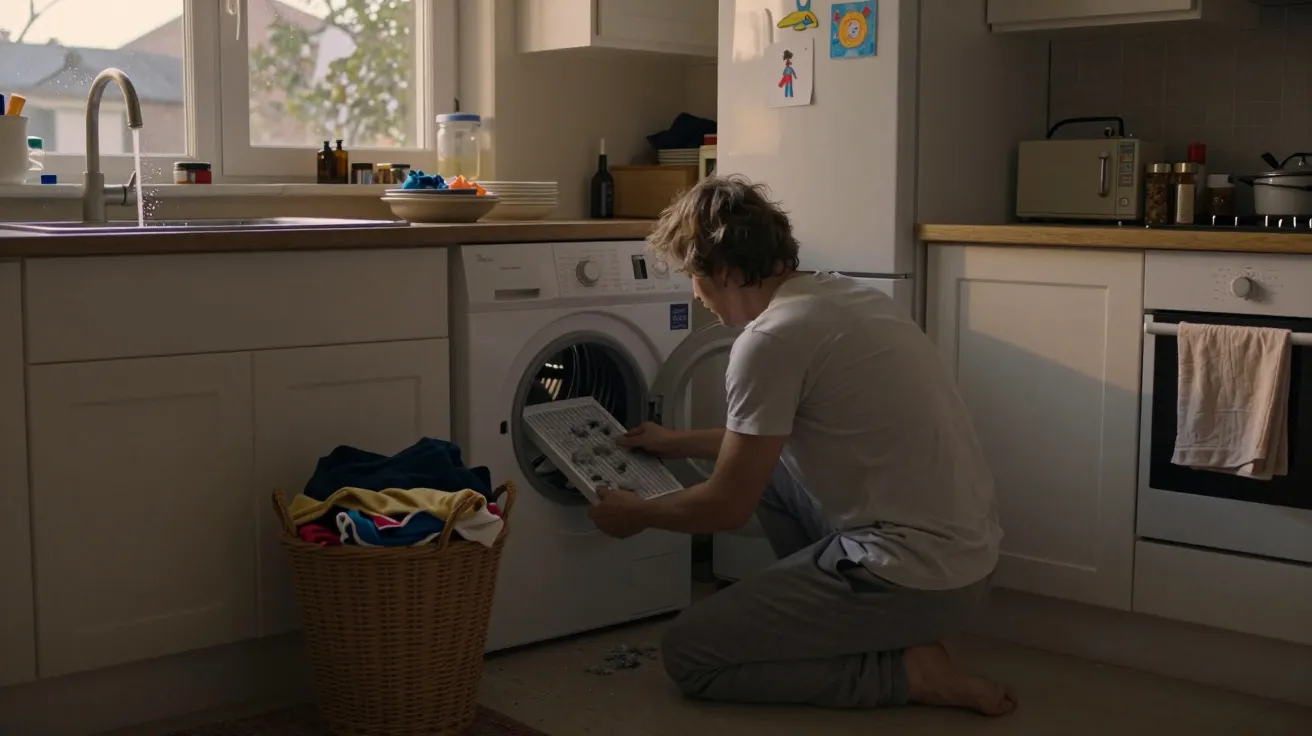
The common tumble dryer filter everyone forgets – and why it’s a fire risk
The laundry basket was finally empty. The house was quiet, just the low hum of the tumble dryer in the corner of the kitchen. Twenty minutes later, the hum changed. A faint, hot smell crept into the room – not quite burning, but sharp enough to make you stop what you’re doing and check.
The clothes were merely warm, not dry. The machine felt hotter than usual at the sides. When the owner pulled out the fluff filter in the door, it was caked in grey felt. Underneath the drum, wedged behind a plastic grille she’d never noticed, sat another thick mat of lint. She hadn’t cleaned it once in five years. She didn’t know it existed.
Most people think they’re on top of dryer maintenance if they clear the obvious fluff in the door. Many machines, especially condenser and heat pump models, hide another filter lower down – out of sight, easy to ignore, and quietly dangerous.
The filter you can’t see – and why it matters
Dryers work by pulling air over a heating element or heat pump, through your clothes, then back out through vents and filters. Every fibre that leaves your jeans, towels or bedding ends up somewhere in that path. The “somewhere” is meant to be a series of filters you can get to. The reality is often more complicated.
The classic lint screen in the door catches the obvious fluff. Below that, near the kick panel, lives the condenser unit or a secondary filter. It’s usually behind a hinged flap or a small panel you have to pop off with a gentle pull. That hidden section is where fine lint, pet hair and dust settle, layer after layer, until air can barely pass.
A repair engineer in Manchester described it as “breathing through a scarf soaked in dust”. The machine strains, runs hotter and longer, and the heat has nowhere safe to go. That’s not just bad for your electricity bill. It’s exactly the kind of environment where a spark or a glowing element can set lint alight.
We talk a lot about chip pan fires and overloaded sockets. The quiet truth is that tumble dryers are linked to thousands of household fires over the last decade. In many of those investigations, lint build-up and blocked filters show up again and again.
How hidden lint turns into a fire hazard
Lint doesn’t look threatening. It’s soft, almost weightless, usually a neutral grey that makes it seem harmless. Chemically, though, it’s a concentrated mix of cotton, polyester, and whatever else your clothes are made from – all flammable, finely shredded and bone dry.
When airflow is blocked by that forgotten filter, three things happen. The heater has to work harder to reach the set temperature. Surfaces around the heater run hotter than they were designed for. Meanwhile, the machine takes longer to dry the load, giving that heat more time to soak into lint piles hidden in corners and gaps.
If you’ve ever smelt that sharp, singed odour when you open the door mid‑cycle, that’s your early warning. In severe cases, lint can smoulder out of sight for a while before igniting properly. By the time flames show, they’re often inside the machine casing, behind a metal panel you can’t reach with a damp tea towel.
Manufacturers know this, which is why most manuals quietly tell you to clean every filter after each use, and to wash out condenser units under a tap every month. The problem is simple: almost nobody reads the manual once the installer has left. The lower panel might as well be a secret compartment.
How to find and clean the “forgotten” filter
You don’t need to be an engineer, and you don’t need tools. You do, however, need to turn the machine off at the wall before you start. Warm, not hot, is the safest time to check – after the drum has stopped but before everything is stone cold.
For most condenser and heat pump dryers, the steps look like this:
- Open the obvious lint screen in the door or just inside the drum and clear it as usual.
- Look at the bottom front of the machine. You’ll typically see a flap, a small panel, or a rectangular door.
- Gently open that panel. Inside, you’ll either find:
- A pull‑out plastic cassette (the condenser), or
- A secondary mesh filter sitting in front of it.
- A pull‑out plastic cassette (the condenser), or
- Slide the condenser or filter out slowly, keeping it level so you don’t drop soggy lint everywhere.
- Remove the lint by hand first. Then rinse the unit under warm running water until it flows clear through the fins or mesh.
- Let it drain and dry for a few minutes, then slide it back in, making sure it seats fully home before closing the panel.
Some vented dryers also have a secondary filter in the exhaust path, often behind a panel at the back or side. If you’re not sure, search your exact model number plus “clean filter” online – videos are often clearer than line drawings.
Let’s be honest: nobody does this after every single load. A realistic routine is to clear the door filter every time, then give the lower filter or condenser a rinse once a month, or more often if you dry pet bedding, towels and fleece regularly.
Signs your dryer is quietly suffocating
You don’t have to wait for burning smells to know something’s wrong. Machines tend to complain long before they become truly dangerous. You just have to know what to listen for.
Typical red flags include clothes that are still damp after a full cycle, or cycles that seem to take longer than they did when the dryer was new. The outside of the machine might feel hotter than usual, particularly around the sides or near the control panel. Some models throw up vague warnings like “check filter” or stop mid‑cycle with no clear reason.
Another quiet clue is the electricity bill. A blocked filter forces the dryer to run harder to do the same job, which shows up as a slow creep in energy use over the winter, even if your laundry habits haven’t really changed. On heat pump models, you may hear the compressor working almost constantly instead of cycling on and off.
If you’re emptying the water tank far more often than before, but clothes are still damp, that can point to poor airflow too. The machine is pulling moisture out but struggling to push warm air evenly through the drum. Nine times out of ten, a choked lower filter or dusty condenser is the culprit.
A quick safety routine you’ll actually stick to
The safest routine is the one you can do on autopilot, half‑asleep on a Sunday night with work shirts spinning. It doesn’t need to be complicated.
Think in three small habits:
- Every load: Clear the main lint screen in the door or drum. A quick wipe with your hand or a soft brush is enough.
- Every month: Turn the dryer off, open the lower panel, and rinse the condenser or secondary filter under warm water.
- Every season: Pull the machine forward, if you can, and gently vacuum around vents, grills and the floor behind it to lift stray lint.
If your dryer vents outside through a hose rather than a water tank, add one more step: check the outside vent flap once in a while. Make sure it opens freely and isn’t choked with fluff, leaves or a bird’s nest. A blocked vent can send hot, moist air straight back into the machine.
The biggest mistakes engineers see aren’t dramatic. They’re simple things: running back‑to‑back loads without a break, shoving the dryer into a tight cupboard with no ventilation, never emptying the water tank fully, and ignoring that “clean filter” light for weeks because the clothes still seem to dry “well enough”.
Dryers are workhorses. They will put up with a lot. But lint is patient, and it only needs one good spark.
What your dryer is trying to tell you
There’s a quiet moment in most households when the machine clicks off and you stand in front of it, hand on the door, waiting to see if this time the towels are actually dry. If there’s a pause, a slight hesitation before you open it, that’s your own early warning system: is this machine still safe, or just doing its best under a blanket of fluff?
A blocked filter is your dryer’s version of cracked winter hands or cloudy headlights. It’s not vanity. It’s a sign that the environment you’ve put it in – confined, dusty, overworked – no longer matches how it was built to run.
Responding doesn’t require a new appliance or a call‑out fee. It looks like kneeling down once a month to pop off a panel, rinsing a plastic cassette in the sink, wiping out a small, hidden compartment. Small, slightly dull actions that cut the risk of fire and extend the life of a machine you quietly rely on.
Look along a row of terraced houses on a damp evening and you’ll see warm light in kitchens, steam on windows, the hum of white goods doing their anonymous work. Behind more than a few of those walls, a dryer is breathing through a thick mat of lint, one overloaded cycle away from real trouble.
Sharing the unglamorous trick – “Have you cleaned the bottom filter lately?” – isn’t just being fussy. It’s passing on a bit of quiet safety.
| Key point | Detail | Why it matters |
|---|---|---|
| Hidden lower filter | Often behind a small front panel, easily missed for years | Major source of lint build‑up and overheating |
| Lint as fuel | Dry fibres + blocked airflow + heat source | The basic recipe for a tumble dryer fire |
| Simple routine | Clear door filter every load, rinse lower filter monthly | Keeps drying times down and risk lower |
FAQ:
- Do all dryers have a second filter? Many condenser and heat pump models do, usually near the bottom front behind a flap. Vented dryers may have fewer internal filters but still need their hose and outside vent kept clear.
- How often should I clean the hidden filter or condenser? Manufacturers often say every month. If you dry lots of towels, pet bedding or fleece, checking every couple of weeks is sensible.
- Is it dangerous if I’ve never cleaned it before? It’s not automatically an emergency, but a thick build‑up does increase fire risk and strain the machine. Switch it off, clean all filters and vents thoroughly, then keep an eye on smells and drying times.
- Can I use a hoover instead of rinsing under the tap? A vacuum can lift loose fluff, but only water will properly clear the fine dust from the condenser fins. Use both if you can: hoover first, then rinse.
- When should I call a professional? If you smell burning, see scorch marks, hear unusual noises, or the machine cuts out repeatedly even after a deep clean, unplug it and call an engineer rather than trying to take panels off yourself.






Comments (0)
No comments yet. Be the first to comment!
Leave a Comment