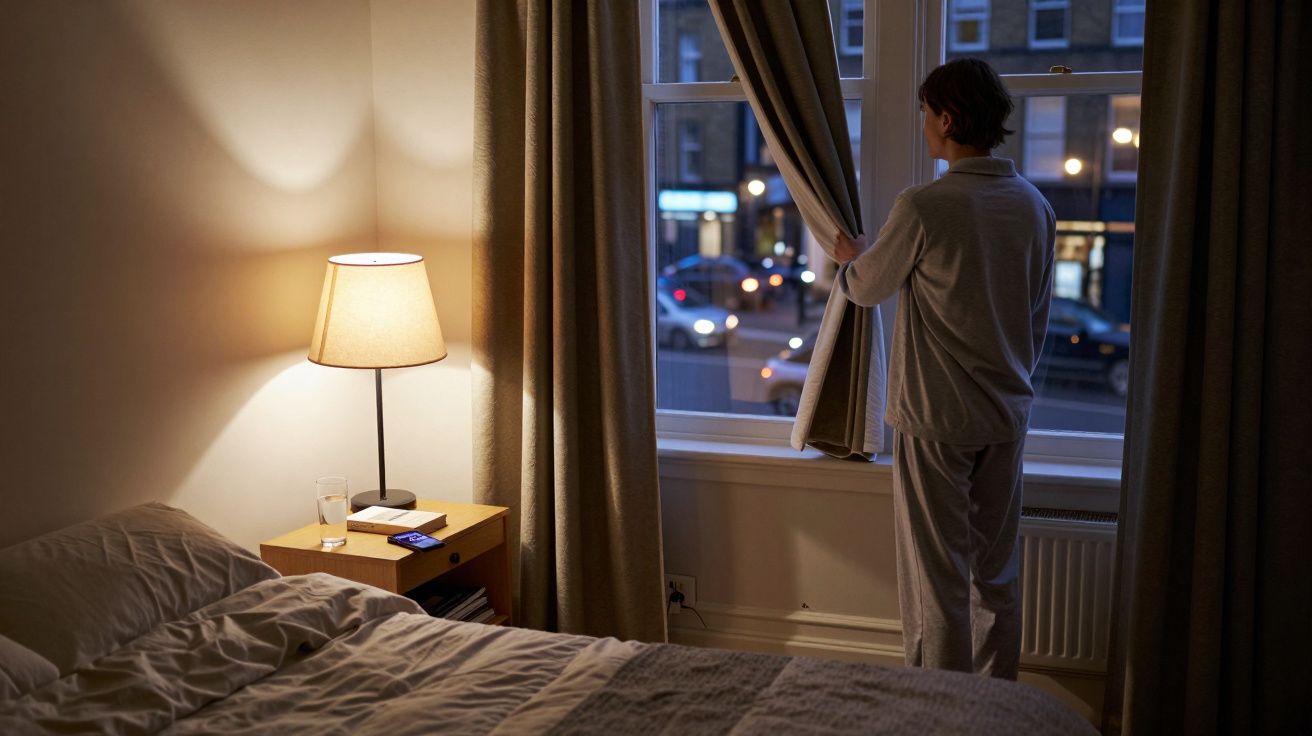
The forgotten curtain lining that can cut street noise in half in busy British cities
You notice it most at night. The fox shriek in the alley, the midnight bin lorry, the bar crowd drifting home past your first-floor flat in Manchester or Hackney. You move in, paint the walls, build a bookcase, buy “thick” curtains from a high street chain, and still the city hum seeps through like water under a door. What most people never discover is that the real sound barrier isn’t the fabric you see - it’s a quiet layer you don’t.
I first clocked the difference in a rented flat above a bus stop in Leeds. Two identical windows, two sets of curtains from the same shop. One had the original flimsy lining; the other, the landlady’s dad had insisted on “doing properly”. He turned up with a roll of heavy white cloth that looked more like a moving blanket than anything to do with interiors. He called it “bump”. We swapped the lining on one pair only. That night, the 2am bus still came. I just didn’t hear it the same way. The room thickened. The air stopped buzzing. Half the noise, none of the drama.
Why city noise sneaks past your curtains in the first place
Most ready-made curtains are built to block light and look decent in photos. They’re usually a single decorative layer with a thin polyester or blackout lining. That’s fine for sunshine; it’s almost pointless for sound. Noise doesn’t care whether your fabric matches the sofa. It cares about mass, thickness, and how many layers of different density it has to fight through before it reaches your ears.
Sound is vibration. When traffic rumble or sirens hit your windowpane, the glass vibrates, the frame vibrates, the air vibrates. A light curtain flaps and joins the party. A heavy, loosely woven cotton or woollen interlining - that old-fashioned “bump” - does the opposite. It soaks up the wobble, turns motion into a tiny amount of heat, and slows the wave down. Add that between your pretty face fabric and a normal lining, and you’ve built a budget recording studio panel disguised as a drape.
Think of a door in a Victorian terrace. A hollow modern door sounds sharp and echoey when you knock; a solid timber one gives a dull, dead thud. Curtains are the same. The lining turns them from hollow to solid. In acoustic tests, properly interlined curtains over leaky single glazing can shave around 5–10 decibels off road noise. That doesn’t sound like much on paper, but our ears don’t work in straight lines - a 10 dB drop is often perceived as roughly half as loud. On a Friday night in central Bristol, that’s the difference between “constant intrusion” and “background city”.
The unsung hero: bump interlining (and its modern cousins)
“Bump” is the old trade name for a thick, soft cotton interlining that sits between your curtain fabric and the usual lining. It looks nondescript, almost scruffy, and feels like a cross between a wool blanket and heavy flannel. That unglamorous bulk is exactly what makes it powerful. Each loose fibre wiggles and rubs as sound tries to pass through, bleeding energy from the wave.
Modern versions come in a few flavours:
- Traditional cotton bump: heavy, breathable, brilliant at damping mid and low-frequency rumble from buses, scooters, and evening traffic.
- Thermal interlining: often a brushed polyester or blend that adds both insulation and some acoustic benefit.
- Multi-layer blackout + interlining combos: these pair light-blocking coatings with a dense core, handy if you’ve got both street lamps and street noise outside.
The magic isn’t just thickness; it’s layers with different jobs. Your decorative fabric reflects some sound, the interlining absorbs and slows the rest, and the back lining tidies the whole sandwich and adds another small barrier. Done well, the curtain feels noticeably weighty when you draw it. It doesn’t flap in drafts; it settles like a quilt.
Here’s the bit most people miss: you don’t have to replace your curtains. In a lot of British rentals and first homes, you can keep the existing fabric and have a workroom or local curtain maker add interlining behind it, or even hang a separate, hidden “inner curtain” just for sound. The look stays; the noise doesn’t.
Small moves that turn a loud flat into a quieter one
The biggest gains come when you treat the window as a system rather than hoping one miracle fabric will save the day. Start with the frame you’ve got, then layer up.
1. Seal the obvious gaps
Before you touch curtains, run your hand around the edge of the window on a breezy day. If you can feel a draft, sound is sprinting through the same gaps. Self-adhesive foam or rubber draught strips, a simple brush strip at the bottom of older sash windows, and a bead of acoustic sealant where the frame meets the wall are boring fixes that knock out the sharpest, most annoying high-frequency leaks.
2. Upgrade the curtain, not just the pattern
If you’re ordering new:
- Ask specifically for interlined curtains with cotton bump or an equivalent heavy interlining.
- Go floor-to-ceiling and as wide as you can: the more wall they cover, the better they’ll absorb side reflections.
- Mount the pole or track as close to the ceiling as possible and let the fabric break slightly on the floor rather than hovering above the skirting.
If you already own curtains you love, talk to a local curtain maker about:
- Unpicking the heading and adding bump between your fabric and the existing lining.
- Or making a separate interlined panel that hangs on a secondary track behind your current curtains. Landlords tend to mind less when the original curtains stay untouched.
3. Close the side and top leaks
Even the heaviest curtain struggles if sound can just sneak round the edges. In tight British terraces and flats, a simple pelmet box or a deep curtain valance board above the track blocks the “chimney” of air at the top. On the sides, consider:
- Extending the pole at least 15–20 cm past the window reveal so the curtains can overlap the wall.
- Using return hooks or small brackets on the wall so the curtain edge can tuck back and form a shallow “U” that hugs the frame.
It’s not about perfection; it’s about forcing sound to go through fabric instead of round it.
4. Back it up with soft surfaces
Once you’ve tamed the direct blast from the street, the room itself matters. Bare floors and lots of glass bounce what’s left back at you. A rug, a fabric sofa, bookshelves with uneven spines, even a tapestry or quilt on the noisiest wall all nibble away at echoes. The goal is not silence; it’s a softer, shorter sound. Your neighbour’s late film still exists, it just doesn’t live in your bedroom.
“The right lining turns a curtain from decoration into infrastructure.”
What might change if you add one hidden layer
Give it a week after you fit properly interlined curtains and something subtle shifts. You stop turning the TV up every time a moped screams past in Croydon. The upstairs neighbour’s argument still happens, but it no longer feels like it’s taking place on your pillow. You notice your own footsteps more than the street’s. That’s the sign the balance has tipped in your favour.
We tend to think of city noise as an unchangeable tax on urban life. Yet a forgotten trade trick used in old townhouses and theatres is still there, quietly doing its job wherever someone bothered to specify it. In London or Liverpool, interlining won’t erase a double-decker, but it will take the edge off the grind so your nervous system isn’t on constant alert. And that matters: fewer micro-jolts from outside means deeper sleep, lower stress, and mornings where you don’t wake already braced for the next siren.
You don’t need a full renovation or triple glazing to start. You need one window you care about most - usually the bedroom - a heavy, unshowy layer called bump, and a couple of small fittings that keep the fabric snug against the wall. It’s not glamorous. It’s not Instagrammable. But on a Wednesday night in a noisy British city, when you close the curtains and the room exhales, it will feel like you’ve moved to a quieter street without packing a single box.
| Key move | What it is | Why it helps in the city |
|---|---|---|
| Add bump interlining | Thick cotton or thermal layer between fabric and lining | Adds mass and absorption; cuts perceived street noise dramatically |
| Seal and overlap | Draught strips, wider poles, returns, pelmets | Stops sound sneaking round edges and through gaps |
| Treat one key room | Focus on bedroom or home office first | Quickest win for sleep, focus, and sanity |
FAQ:
- Do I need new curtains, or can I upgrade what I’ve got? In many cases, a curtain maker can add interlining behind your existing fabric or hang a separate interlined layer behind it. You keep the look and gain the sound reduction.
- Is blackout lining enough for noise? Blackout helps a little by adding mass, but on its own it’s mainly for light. Pairing blackout with a dedicated bump interlining gives a far bigger acoustic benefit.
- Will this work with double glazing, or is it only for draughty windows? It helps both. On older, leaky single glazing it’s transformative; on decent double glazing it mops up remaining noise and echo, especially in hard-floored rooms.
- Is there a big difference between cheap “thermal” curtains and proper interlined ones? Budget thermal curtains are better than a bare window, but purpose-made interlined curtains with heavy bump are noticeably denser, quieter, and longer-lasting.
- Where should I start if I’m on a tight budget? Prioritise the noisiest room you sleep or work in, seal obvious gaps, and add the heaviest interlined curtain you can afford to that one window. One well-treated space beats five flimsy fixes.






Comments (0)
No comments yet. Be the first to comment!
Leave a Comment