The humble bar of soap that makes your wardrobe smell like a boutique and keeps moths away
You open the wardrobe and the air hits you first. Not the faint whiff of “clean laundry from three weeks ago”, not the odd hint of damp, but a quiet, grown‑up smell that could belong to a small boutique in Copenhagen. No diffuser, no fancy spray. Just a bar of soap that cost less than your morning coffee.
The trick isn’t new. Your nan might have done it with lavender soap and camphor blocks. The difference now is that we understand why it works, which soaps to pick, and how to tuck them into the corners so your cashmere smells expensive and your moths move on.
The soap never touches the clothes. It just sits there, doing slow, invisible work.
Why a bar of soap beats sachets and sprays
Most wardrobe “fresheners” try very hard. They shout with synthetic perfume for a week, then fall silent. Sprays fix the air for ten minutes and leave your wool smelling faintly like a duty‑free shop. Soap is quieter. It evaporates slowly, releasing fragrance in the same way it scents a bathroom, only gentler and for much longer.
There’s a practical edge to this. Good quality soap is basically a scented solid: fats, oils, and fragrance bound together. That means it holds onto essential oils more stubbornly than a sachet of loose petals, but still lets them drift out over months. Tuck a wrapped bar between piles of knitwear and you get a steady, low‑level perfume instead of a loud blast that fades.
Then there’s the moth issue. Clothes moths dislike certain smells: cedar, lavender, rosemary, sometimes citrus. When those scents sit quietly in a closed space, the wardrobe becomes less inviting. You’re not poisoning anything. You’re simply making your wool and silk a little less interesting to visit.
In a tiny London flat with one overworked wardrobe, a couple of lavender and cedar soaps turned a slightly stale cupboard into something that smelled like it had a staff.
The “wrap and wedge” method that just works
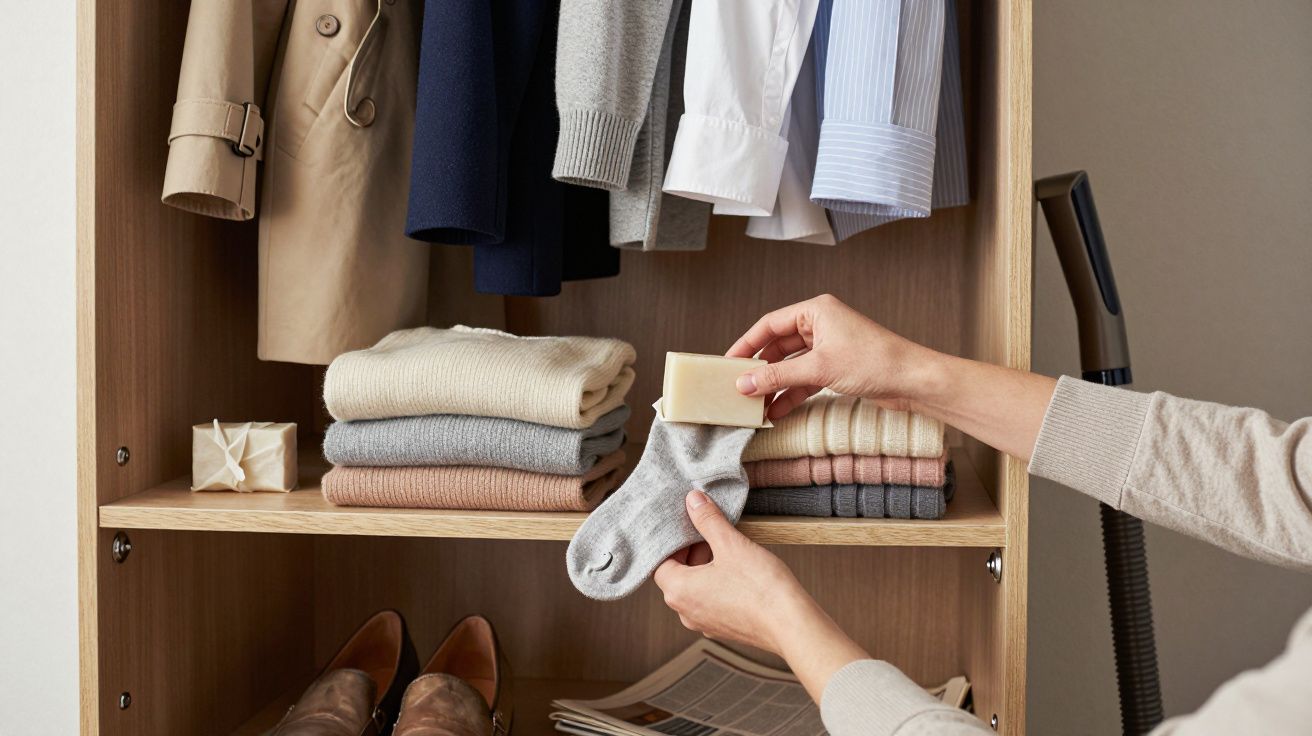
You do not want soap residue on your jumpers. The trick is to let the fragrance out while keeping the bar itself covered. Think of it as storing a tiny scented brick, not a thing you’ll ever lather again.
Here’s the method that works and costs almost nothing:
- Choose a strongly scented bar of soap, ideally with natural oils such as lavender, cedarwood, eucalyptus, or citrus.
- Leave the outer cardboard box off, but keep the thin paper or a layer of kitchen towel around the soap so it never rubs on fabric.
- Pop it into a breathable bag (a cotton sock works), or tuck it in the corner of a shelf where it can’t roll.
- Close the wardrobe and forget about it for a day.
By the next morning, the difference is there. Not “hotel corridor”, but cleaner, drier, more intentional air. In a larger wardrobe, two or three bars spread the scent evenly. Rotate them: one near knitwear, one near coats, one low down where shoes live and air tends to sit heavy.
A few simple rules keep things smooth. Do not put naked soap directly against delicate fabrics; it can leave a faint chalky mark. Avoid very sugary or novelty scents that can feel cloying once they build in an enclosed space. If anyone in the house is sensitive to fragrance, start with one gentle bar on the lowest shelf and see how it feels.
“My rule is: if I’d be happy to smell it on my skin, I’m happy to smell it on my jumpers,” said a friend who quietly moved every gift‑set soap she’d ever received into her wardrobe.
- Do: Keep soap wrapped in thin paper or fabric, not plastic.
- Do: Place bars where air can move around them, not buried in the tightest stack.
- Don’t: Mix too many strong scents in one small cupboard.
- Don’t: Use this instead of cleaning; soap scent sits best on dry, aired clothes.
How soap scent gently bothers moths
Moths are not really chasing holes; they are chasing a place to lay eggs. The adult moths prefer dark, undisturbed corners that smell slightly of natural fibres and body oils. That subtle mix tells them “wool buffet”. Change the smell and you change the invite.
Lavender and cedar are the classics for a reason. Their essential oils release volatile compounds that moths find off‑putting. It is not a force field. If your wardrobe is already full of larvae, no amount of soap will undo that overnight. But as part of a routine-clean clothes, the odd vacuum of drawers, the door shut when lights are off-a strongly scented soap tilts the odds.
In a rented flat with suspiciously vintage carpet and a second‑hand wardrobe, I lined the bottom with old newspapers, vacuumed hard, then parked two bars of plain cedar soap on the back corners. Over the next winter, the only holes in jumpers were the ones I bought them with.
Pair scent with common‑sense hygiene:
- Wash or dry‑clean wool before long storage; moths love sweat and food traces.
- Brush coats before they go away for the season.
- Keep rarely worn pieces in breathable garment bags; add a soap bar to the base.
- Give drawers and wardrobe floors a quick hoover every couple of months.
Soap is not a pesticide. It is a polite but persistent “no thank you” in scent form.
Choosing the right bar (and where to put it)
Not every soap belongs with your clothes. You want bars that hold their fragrance and do not crumble. Triple‑milled soaps tend to last longest; handmade bars with big chunks of flower or peel can shed.
Think about three simple filters:
| Choice point | Go for | Avoid |
|---|---|---|
| Scent | Lavender, cedar, rosemary, eucalyptus, crisp citrus | Very sugary, food‑like, or heavy musk scents in small spaces |
| Texture | Firm, smooth, well‑pressed bars | Crumbly or exfoliating soaps with big grains |
| Wrapping | Paper, cotton bag, thin cloth | Plastic wrap that traps the fragrance |
Placement matters too. Air inside a wardrobe moves more than you think: it drifts from the gap at the top, past shoulders and shelves, and settles low down. Put soap where that air passes.
- On a high shelf near where hangers sit, so scent falls through coats.
- In each drawer corner, wrapped, for folded jumpers and T‑shirts.
- In shoe cupboards or boxes that always smell “a bit lived in”.
Let’s be honest: nobody is repositioning soap in their wardrobe every week. You do this once, maybe twice a year. When a bar looks small and dry and the scent has faded, move it to the bathroom sink and bring in a fresh one for the clothes.
The tiny ritual that changes how your clothes feel
There is a strange satisfaction in opening a door and getting the same clean, calm smell every time. It makes old jumpers feel looked after. It makes you less nervous about lending someone a coat from the back of the rail.
You also waste less. Clothes that smell fresh get worn more, not left in the “I’ll wash that first” zone. A scented wardrobe nudges you to close the door properly, fold things away, keep damp out. The bar of soap is tiny, but the habit around it is bigger.
Tuck one into the wardrobe of the friend who just discovered cashmere, or the child leaving for university with one overstuffed rail. It is a humble, almost funny hack, and it feels like a small upgrade to daily life that somehow dodged the marketing department.
FAQ:
- Will any bar of soap work, or does it have to be lavender? Most scented soaps will freshen the air, but lavender, cedar, and herbal blends are particularly helpful for deterring moths. Strong, long‑lasting scents deliver the best results in closed spaces.
- Can soap stain clothes if it touches them? It can leave a light residue on delicate fabrics, especially silk and fine wool. Keep soap wrapped in paper or cloth and avoid direct contact with garments.
- How many bars do I need in one wardrobe? For a single‑door wardrobe, one or two bars are usually enough. Larger wardrobes or full wall units may benefit from three or four, spaced out on different shelves.
- How long does a soap bar keep working in a wardrobe? In a closed space, most good‑quality soaps keep a useful scent for six to twelve months. Replace them when you notice the smell has faded.
- Is soap enough to get rid of an existing moth problem? No. If you already see moths or holes, you’ll need a proper clean‑out: wash or freeze affected items, vacuum, and possibly use moth traps. Soap works best as prevention once things are under control.



Comments (0)
No comments yet. Be the first to comment!
Leave a Comment