The old-fashioned trick with newspaper that keeps rubbish caddies drier and easier to clean
Before compostable liners and fragranced bin bags, there was something simpler in almost every kitchen drawer: yesterday’s paper. Folded, crumpled, slid into the bottom of a caddy, it turned wet peelings and tea bags into something you could tip out in one move. If you’ve ever wrestled with a slimy food waste caddy, you know why that old habit deserves a comeback.
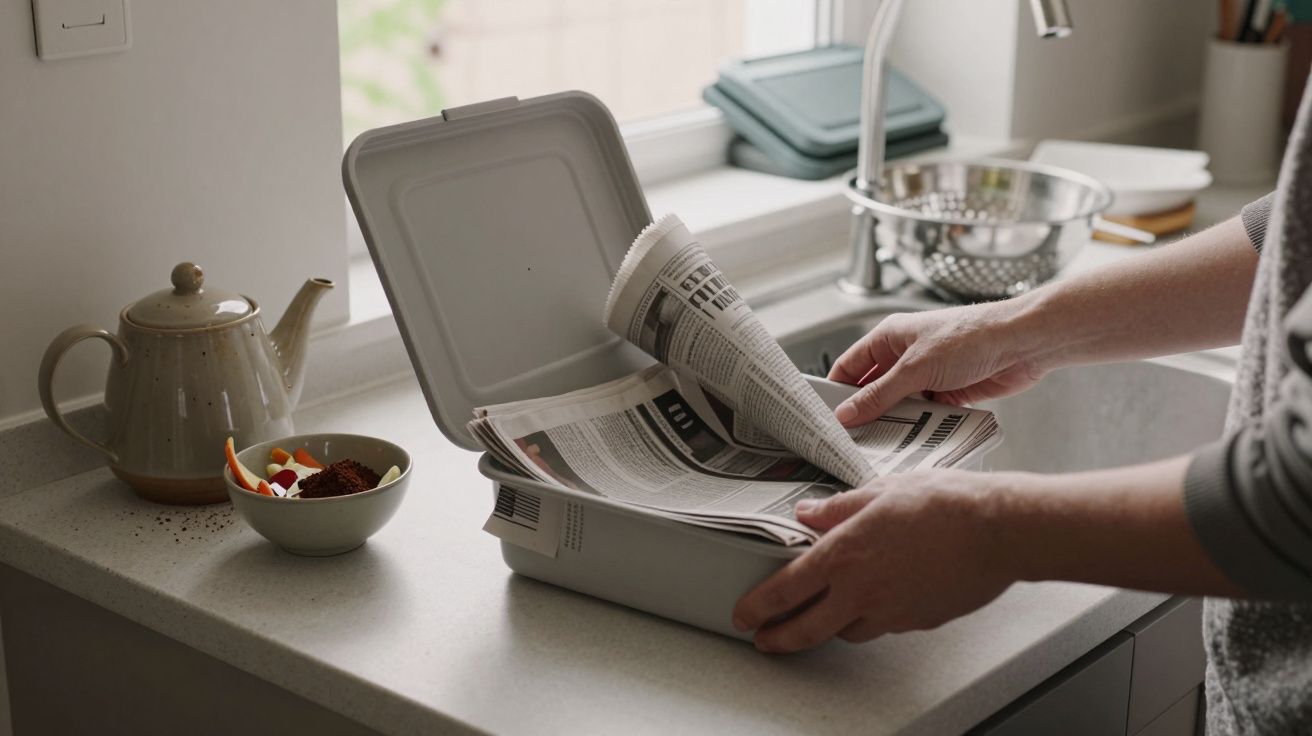
He flipped open the lid of a council‑issue caddy: coffee grounds welded to the corners, a faint slick at the bottom. Then he did something your gran might recognise. Two sheets of newspaper, folded and pressed into the base, one more wrapped into a loose cone. The next pot of tea was drained straight onto the paper. By the end of the week, the whole lot lifted out like a parcel instead of a puddle.
Let’s be honest: no one buys a fancy caddy dreaming of scrubbing it at the sink. A little paper can save you ten minutes and a noseful of yesterday’s dinner.
Why newspaper works so well in a food waste caddy
The trick is dull on paper and brilliant in practice. Newsprint is porous, fibrous and just thick enough to act like a sponge and a release film at the same time. It soaks up stray liquid from tea bags, fruit cores and coffee grounds, and it forms a dry(ish) layer between your scraps and the plastic.
Layered correctly, **the paper does three jobs at once**: it absorbs moisture, prevents bits from welding to the corners, and lets you lift the whole load out in one go. That matters more in small kitchen caddies than in big wheelie bins, where every smear feels oversized.
Councils that accept paper in food waste often endorse this outright. Some even show a simple “origami liner” using a broadsheet on their websites. Where plastic liners are banned or chargeable, newspaper is a low‑tech workaround that uses what you already have.
How to line your caddy with newspaper in under a minute
You don’t need perfect folds; you just need coverage and a bit of overlap. Here’s a simple routine that works with most small kitchen caddies:
Start with two full sheets of newspaper
Lay them flat, one on top of the other. If the paper is very thin, use three.Fold to fit the base
Fold the stack roughly to the footprint of your caddy, then press it into the bottom so it comes a few centimetres up the sides. Corners can be pleated or simply squashed in.Add a loose “inner cone”
Take another sheet, roll it into a wide cone or shallow bowl and place it inside. This is where tea bags, coffee grounds and peelings land first, building a drier core.Tuck as you go
As the week passes and the paper settles, you can add another half sheet on top if you see liquid, or tuck the upper edges in to keep the lid clean.Lift, tip, replace
On collection day, grab the dry upper edge of the paper, lift the bundle and tip it into your outside food waste bin. If your council allows, the paper can go in with the food. Then re‑line in the same way.
You’ll know you’ve got it right when the caddy bottom looks dusty rather than slimy and a quick wipe is all it needs.
Common mistakes – and how to avoid them
Most frustrations with this old‑school trick come from small missteps rather than the idea itself. A few tweaks make the difference between a neat parcel and a soggy mess.
People often use **too little paper**, especially in the base. One flimsy sheet will tear as soon as it’s wet; two or three create structure. On the flip side, stuffing in half the Sunday supplement can block air and encourage smells. Aim for thin, overlapping layers, not a tight plug.
Greaseproof paper and glossy inserts feel tempting, but they absorb poorly and can contaminate food waste in some areas. Stick to plain, uncoated newsprint if your council allows it. If you’re in doubt, check the food waste leaflet: some insist on “food and certified liners only”, in which case keep the paper as a dry base and shake the scraps out, rather than tipping paper and all.
And then there’s timing. Leaving food waste in a warm kitchen for ten hot days will test any system. Shorten the cycle in summer, and keep particularly wet or fatty leftovers (like gravy and frying oil) out of the caddy where possible.
Fine‑tuning the trick for smells, leaks and different homes
A sheet of paper won’t erase biology, but it can help manage it. You can stack a few easy habits to push the odds in your favour.
- Double up under the handle ridge: If your caddy has grooves or a handle bar inside, tuck a narrow strip of paper over them before you line the base. That’s where liquids like to hide.
- Freeze the worst bits: In small flats without outdoor bins, keep particularly smelly scraps (fish skins, prawn shells) in a tub in the freezer and drop them into the caddy just before collection.
- Let it drip first: Keep a small colander or sieve by the sink. Tip pasta water, soup remnants or watery salads through it before the solids hit the caddy. The paper then works with you instead of being swamped.
- Match the fold to the bin: Tall, narrow caddy? Use a deeper cone that reaches higher up the sides. Wide, shallow one? Focus on covering the base generously; smells will escape at the lid rather than through the walls.
If you share a kitchen, a small note on the inside of the lid – “no liquids, no bags, use the paper” – can save you from well‑meant sabotage.
What this changes for cleaning, costs and the planet
The gains here are modest on paper and very real in your week. **A dry‑lined caddy usually needs a quick wipe, not a scrub.** Over a year, that’s hours not bent over the sink, less hot water down the drain and fewer “I’ll do it later” moments that stretch into smells.
Skipping or reducing plastic liners can mean fewer rolls bought on autopilot. If you share a household budget, that’s a line on the receipt you can quietly delete or at least shrink. Using newspaper you already have is not a miracle environmental cure, but it turns a single‑use product into a second useful life before recycling or composting.
There’s a psychological shift, too. When the caddy is easy to empty and clean, you’re more likely to use it properly, which keeps food waste out of general rubbish and in the streams where councils can actually turn it into energy or compost. It’s a small behavioural nudge hiding in a very ordinary fold.
| Tip | What you do | Why it helps |
|---|---|---|
| Line the base thickly | Use 2–3 sheets of plain newspaper in the bottom | Keeps liquids off plastic and makes lifting easier |
| Keep liquids out | Strain soups, sauces and stews before scraping | Prevents the paper from turning to sludge |
| Empty more often in heat | Shorten the cycle in summer | Reduces smells and fruit flies |
FAQ:
- Is it safe to put printed newspaper in my food waste caddy? In many UK areas, yes – newsprint inks are now largely soy‑based and councils explicitly allow newspaper in food waste. Always check your local guidance, as some only want food and certified liners.
- Won’t the newspaper just go soggy and tear? It will get damp, but using several layers and avoiding excess liquid means it usually holds together until collection. If it does tear, it still protects the base from the worst of the mess.
- Can I use magazines or glossy leaflets instead? Best not. Glossy, coated paper absorbs poorly and may not break down properly in food waste treatment, so it’s usually better in the recycling bin.
- What if my council bans any kind of liner? You can still use a folded sheet as a temporary “tray”, then tip the food out and put the soiled paper in general waste if required. You lose part of the benefit, but the caddy is still easier to wipe.
- Does this replace rinsing the caddy? Not entirely. You’ll need to clean it occasionally, but with a good paper lining, a quick wipe and an occasional mild detergent wash are usually enough instead of a full scrub every week.




Comments (0)
No comments yet. Be the first to comment!
Leave a Comment