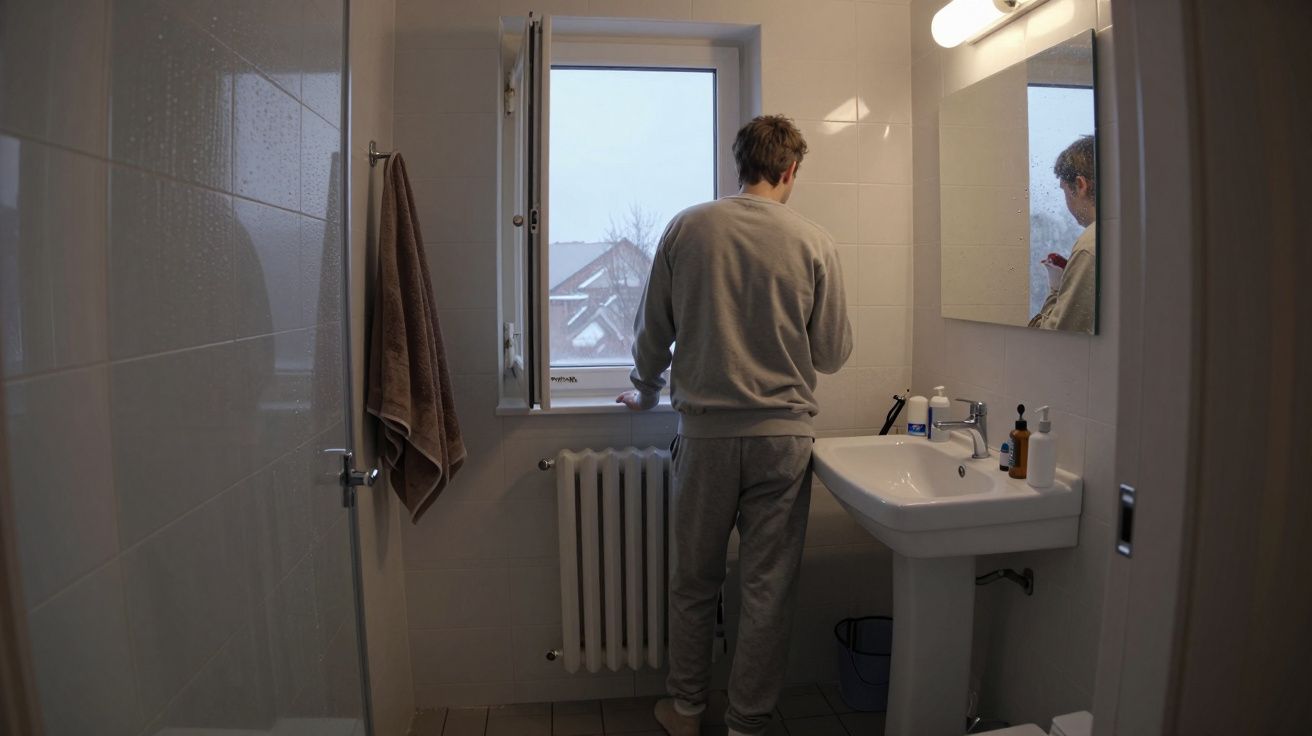
The one window you should always open for five minutes, even on freezing days
The cold came in like a verdict: grey sky, air that stung your throat, radiators pushed up a notch without anyone quite admitting it. Outside, wind worried at the hedges and bus stops were full of people doing that winter hunch, faces parked in scarves. Inside, the house felt like a fortress - double glazing, draught excluders, thick curtains drawn early in the afternoon. It was also, if you looked closely, quietly clouding over from the inside out.
The first clue was the bathroom mirror, dripping before breakfast. Then the bedroom window frame, furry with black specks along the rubber seal. A stack of schoolbooks left by the sill came up with a faint tide mark. The air smelt faintly of washing powder and something else, a sour, shut-in note that never quite cleared. We blame the season, or the landlord, or the age of the house. What’s really happening is simpler: we’ve sealed the box and forgotten to let it breathe.
There is one window in almost every home that should be opened for five minutes a day, even when the weather makes you wince. It isn’t the prettiest, or the one with the best view. It’s the one where steam and breath and indoor weather collect first.
The wettest room wins
If you had to pick a single place where your day’s moisture piles up, it’s usually the bathroom or the kitchen. Showers, boiling pans, kettles clicking on, wet towels slung over doors - they all push invisible water into the air until the room’s walls and windows start doing the only thing they can: catch it. On a freezing morning, the glass turns from clear to misted in seconds, then to beads, then to runnels. The house starts wearing its own rain on the inside.
Cold surfaces are magnets for this. Warm, moist air drifts across a pane chilled by the outside air, drops its water like a suitcase, and carries on lighter. That thin strip of black mould that appears at the corner in January isn’t poor hygiene; it’s a diary of every shower you’ve taken with the door closed and the fan switched off because it was “too cold to open anything”. We trap our humidity, then wonder why windows sweat and skirting boards swell.
The quiet truth is that your house is constantly exhaling water. Every person in it breathes out roughly a pint a day. Add drying clothes on radiators, simmering stews, and hot baths, and you are asking your rooms to hold several litres of water that the walls never volunteered to store. One small, routine opening in the right place can give it somewhere safer to go.
Why five minutes is enough
It feels wrong at first: turning the handle on a window when the forecast is full of ice warnings and your phone app says it “feels like -3°C”. Yet the maths of draughts is odd in our favour. A short, sharp burst of ventilation - a window opened fully for five minutes - clears a surprising amount of moisture without stripping away all the heat your boiler fought to add.
Air heats and cools quickly; bricks, plaster and furniture do not. When you open a window wide for a few minutes, warm, damp air rushes out and cold, dry air sweeps in, but your walls and floors stay relatively warm. Close the window again and that stored warmth starts reheating the fresh air. Trickle vents or a window on the latch all day, by contrast, bleed heat continuously and never quite fix the dampness.
There’s also a comfort trick at play. Humid air feels clammy at lower temperatures than dry air does. Drop the moisture and 18°C can feel more like 20°C, especially once you’re moving around. Five minutes of decisive opening lets condensation on the glass actually dry instead of just sliding down to rot the frame. It’s less a heroic endurance test, more a daily reset.
Think of it as brushing your home’s lungs: brief, regular, and so routine you barely notice it once the habit takes.
The one window to choose - and how to use it
Every home has a “steam champion” - the window that fogs first and longest. In most places it’s one of these:
- The bathroom window near the shower.
- The kitchen window above or near the hob.
- A small hallway or utility window near where clothes are dried.
That is the pane to treat like a valve rather than a view.
Here’s what to do in practice:
After a shower or bath:
Open the bathroom window fully for five minutes as soon as you turn the water off. Keep the door closed while it’s open, so the moisture goes outside, not into the hallway. If you have an extractor fan, run it at the same time.When you cook:
Put lids on pans where possible, switch the extractor on, and crack the nearest window fully for five minutes once things are properly steaming or as you finish. It’s better to do one or two bold openings than to leave a window on the latch all evening.If you dry clothes indoors:
Try to keep the airings in one room. Dry on racks rather than radiators, and schedule a five-minute full window opening once or twice while they’re drying, again with the door closed to keep moisture from wandering into bedrooms.
If you work from home, slot these “air breaks” into your routine: five minutes after your morning shower, five after lunch, five after the evening wash-up. You’re not trying to chill the whole house, just to give the wettest room a quick, clean exhale.
Small details that protect frames, lungs and bills
The enemy here isn’t the cold; it’s the quiet build-up of damp. That strip of mould along a sill is more than a cosmetic annoyance. Moulds release spores that can aggravate asthma, eczema and persistent coughs, particularly in children and older people. They also slowly chew at paint, seals and plaster, turning what feels like a minor winter nuisance into a spring repair job.
A few small habits, nudged into place now, save you both air and money later:
- Wipe visible condensation from sills and frames with a microfibre cloth in the morning; don’t let it pool.
- Keep furniture a hand’s width away from outside walls so air can move behind it.
- Use lids on pans, and avoid leaving wet laundry on radiators overnight.
- If you use a tumble dryer, make sure it vents properly outside or is a condenser model with the tank emptied regularly.
- Check that bathroom and kitchen extractor fans actually draw (you can hold a sheet of loo roll up to them); if they don’t, they may need cleaning or replacing.
You’ll notice a shift when these pieces line up. Windows mist for less time, towels dry properly between uses, and that faint sour smell in a closed-up bedroom simply stops appearing. Five-minute openings are the backbone of that change - the tiny, repeated action that lets every other effort work.
| Habit | What you do | Why it matters |
|---|---|---|
| Five-minute window burst | Open the steamiest room’s window fully once or twice a day | Dumps moisture fast without losing stored heat |
| Shut door while airing | Close the bathroom/kitchen door during the five minutes | Sends damp air outside, not into other rooms |
| Wipe and watch | Mop up heavy condensation; keep an eye on corners and seals | Stops mould taking hold where water lingers |
FAQ:
- Won’t opening a window on a freezing day waste heating?
A short, wide opening cools the air far more than the building. Once you close the window, the warmed walls and furniture quickly reheat the fresh, drier air. Continuous tiny gaps waste more heat overall.- What if I don’t have a bathroom or kitchen window?
Use the nearest openable window and always run extractor fans. Keep doors to steamy rooms closed while you shower or cook, then open the nearest window in a hallway or adjacent room for five minutes.- Can’t I just use a dehumidifier instead?
Dehumidifiers help, especially in very damp homes, but they work best alongside ventilation, not instead of it. They also cost electricity; a five-minute window burst is free.- How do I know if I’m getting it right?
Watch your windows. If condensation clears within 30–40 minutes after your routine and mould stops spreading, you’re on track. Persistent wet glass or growing black spots mean you need more or longer bursts.- Is mould purely a winter problem?
It’s worst in winter because cold surfaces and closed windows trap moisture, but leaks, poor ventilation and drying clothes indoors can cause issues year-round. The five-minute rule is a good habit in any season - it just feels most counter-intuitive when it’s freezing, which is when it quietly matters most.




Comments (0)
No comments yet. Be the first to comment!
Leave a Comment