The plug socket mistake behind that faint burning smell in living rooms each winter
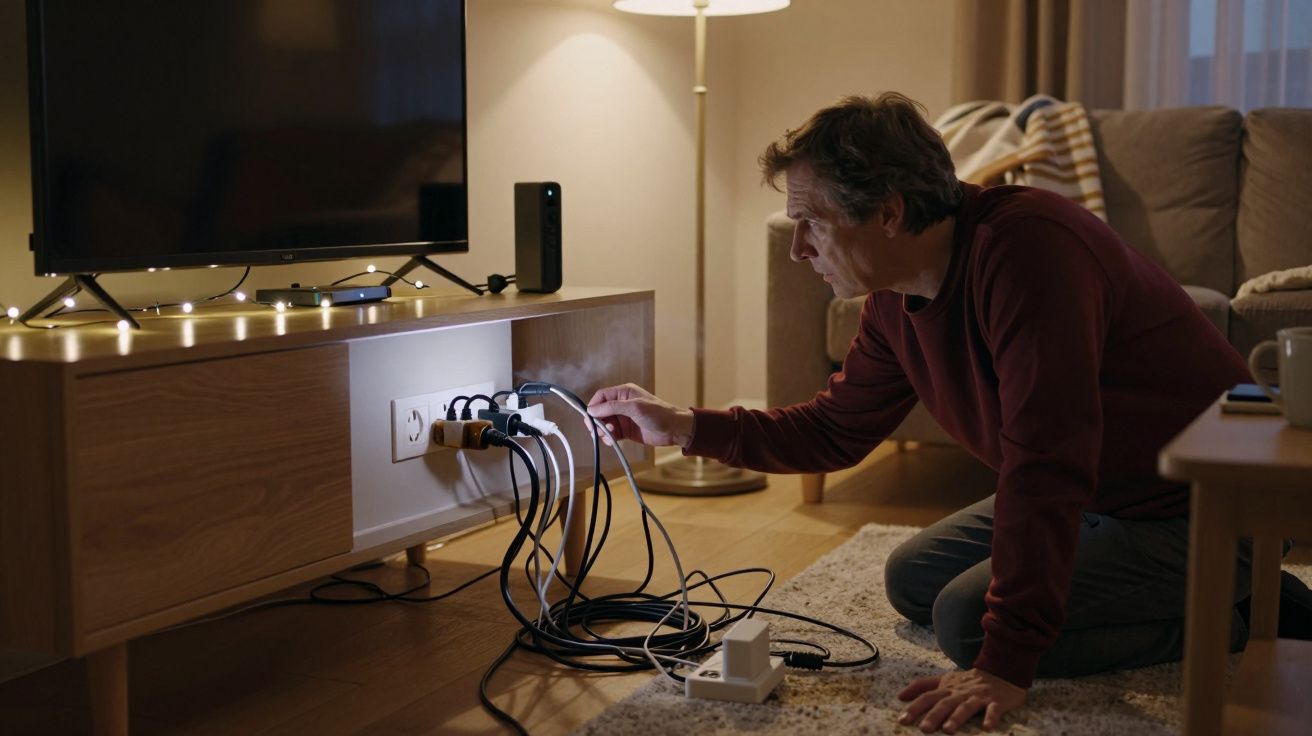
Mine used to do it every November: a thin, plasticky whiff just as the heating clicked on and the fairy lights came out of the cupboard. I’d sit on the sofa, book in hand, telling myself it was the dust on the radiators or the neighbour’s log burner drifting through the vents. Then one year I went hunting for the source and found it - not in the boiler cupboard, but behind the TV stand, where one tired socket was doing the work of a small power station.
The faceplate was just a shade too warm. The plug for the heater sat in a cheap adaptor which sat in a four‑way block which sat in the wall, like electrical Jenga. The faint smell? That was insulation and dust getting hotter than they should. Not yet a fire, but uncomfortably on the same spectrum.
We talk about draughts and damp in winter, but not the little rectangles of plastic we lean on most when the days get short.
The quiet problem hiding behind the bookcase
Living rooms are where winter piles up. The TV, router, soundbar, lamps, chargers, electric blanket, maybe a portable heater for the one cold corner the radiators never quite reach. All of them want a socket. Most British living rooms were built when a telly was a wooden box in the corner and that was your lot.
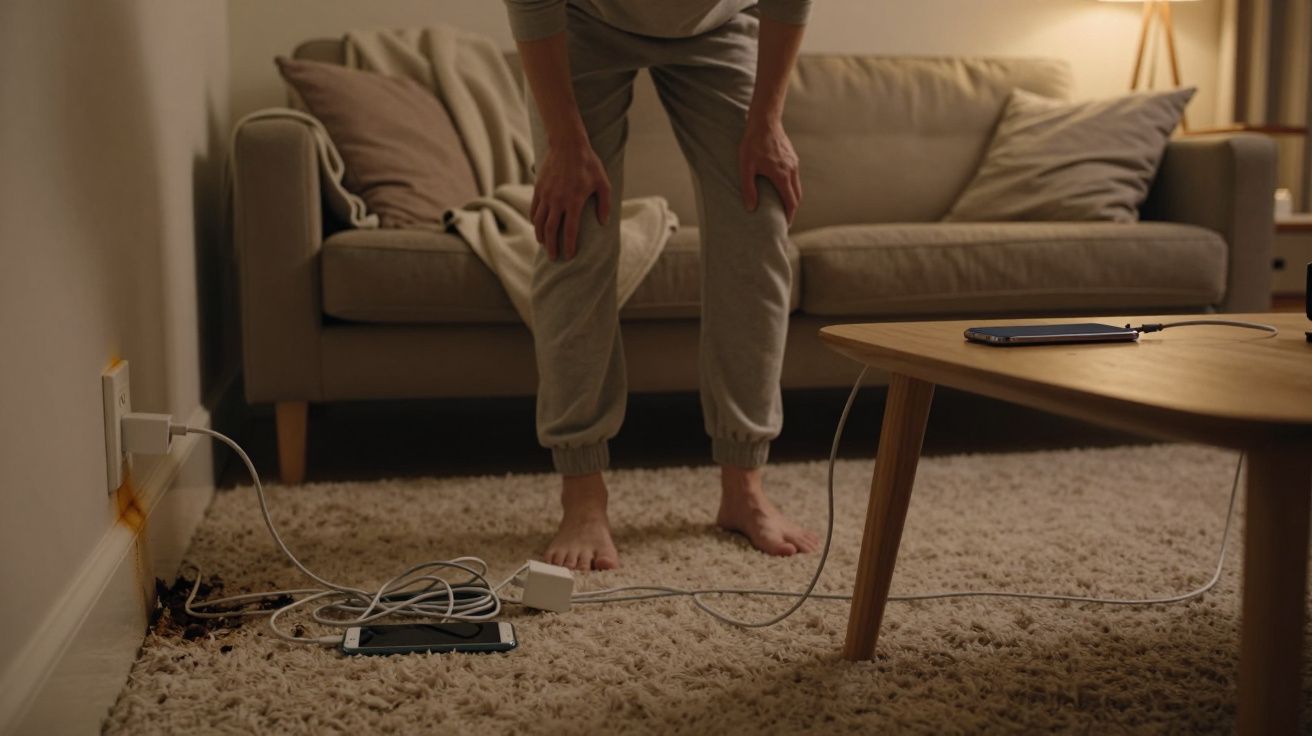
So we improvise. We daisy‑chain adaptors, run extension leads under rugs and convince ourselves that “it’s only for the winter”. The trouble is that electricity doesn’t care about good intentions. Each extra plug adds resistance and heat; each loose connection becomes a little hot spot. Over time, that heat cooks plastic, dries out dust and leaves a signature smell: faintly sweet, faintly chemical, easy to ignore until something browns.
We’ve all had that moment when a plug feels warmer than you expect as you pull it out at the end of the night. That’s your early warning. A socket should be no more than comfortably warm under heavy use. Anything more than that is not it “working hard”; it’s it struggling.
The plug socket mistake you’re probably making
The mistake is simple and common: overloading a single wall socket, then disguising the risk with tidy-looking gadgets.
It looks like this:
- A double socket hidden by furniture.
- A multi‑way adaptor in each outlet, or one adaptor feeding a long extension block.
- High‑demand appliances (fan heater, tumble dryer, air fryer, dehumidifier) all taking power from that one point because “it’s where the TV is” or “it’s the only free socket”.
Each of those appliances might be perfectly safe on its own. The danger comes from concentrating their combined load through one set of pins, one set of screws and a thin layer of plastic in the wall. The socket is rated, but the way we stack things on top of it often isn’t.
Extension leads are designed to spread sockets, not multiply capacity. The fuse in the plug and the cable thickness are chosen for a total load, typically 13 A. Fill all four outlets on the bar with low‑power gadgets and you’re fine. Plug a 2 kW heater, a tumble dryer and a slow cooker into the same bar and you’re pushing that system to its limit.
The worst combination is heavy kit plus tower adaptors and plug‑in cubes. They look clever; they’re really just more plastic wrapped around the same tiny contact area. Heat has nowhere to go but into your wall.
Why winter makes it worse
In July the TV, router and lamp tick along happily on a single extension. In December, we add the seasonal extras: portable heaters for draughty bay windows, heated throws, extra lights, maybe even a plug‑in air freshener for good measure. The total wattage sneaks up.
Heaters and anything that glows to make heat (halogen lights, some old‑style fairy lights) have a habit of drawing close to the maximum a standard plug is designed for. Run them for hours in the evening and small weaknesses in connections turn into real heat. Add the fact that we like to tuck extensions behind sofas and under piles of gifts, and you have a toasty little oven where air can’t circulate.
Dust plays its part. Dust is mostly fibres, skin cells and tiny bits of fluff. When it gathers on warm plugs and sockets, it smells when heated. The first time a heater runs in months, that smell is often “burning dust” and may be harmless. The problem is that it masks more serious signs - that same odour can also be insulation starting to degrade.
We like to tell ourselves it’s just “new heater smell” or the “first‑use whiff”. Sometimes it is. Sometimes it’s a plug asking for help.
The sums your sockets are doing (and how to check them)
You don’t need to be an electrician to get a feel for what a socket can handle. A UK ring‑main socket and a standard fused plug are both designed around 13 amps at 230 volts - around 3,000 watts in total. That’s the combined load the extension or socket should feed.
Most appliances tell you their appetite on a little label:
- Phone charger: 5–20 W
- LED TV: 50–200 W
- Laptop charger: 60–120 W
- Games console: 150–250 W
- Fan heater: 1,500–3,000 W
- Oil‑filled radiator: 1,500–2,500 W
- Dehumidifier: 200–600 W
Add up what lives on one extension. If a single item creeps near 2,000–3,000 W, it deserves its own socket. Heaters and irons are “one‑per‑socket” beasts. Don’t ask an adaptor to juggle them with anything chunky.
A decent habit: when you plug in something that makes heat, ask two questions.
- Is this going directly into a wall socket?
- Is that socket already feeding something greedy?
If the answer to the second question is yes, rearrange the room, not the electrics.
The tell‑tale signs you shouldn’t ignore
Your nose is only one of your early warning systems. A faint burning or warm plastic smell in the evening is worth paying attention to, but other clues often show up first.
Look and feel for:
- Warmth: a plug, adaptor or faceplate that feels hot rather than just mildy warm to the touch.
- Discolouration: yellowing, browning or sooty marks around a socket or on a plug’s plastic body.
- Buzzing or crackling: any noise from a socket when something is running.
- Loose plugs: ones that wobble or sag instead of clicking firmly into place.
- Tripping: fuses blowing or breakers tripping when you turn on a heater or appliance.
Switch everything off at the wall and let it cool. If the smell returns quickly when you power up the same combination of plugs, that’s not “just dust”. That’s a configuration problem, or possibly damaged wiring.
You don’t need to diagnose it yourself. Your job is to notice and act, not to unscrew things.
How to make your living room safer (without living by torchlight)
The good news is that most socket mistakes are easily fixed with a bit of re‑routing and a small shopping list.
Start with a winter reshuffle:
- Plug high‑wattage items (heaters, dryers, big dehumidifiers) directly into wall sockets.
- Use extension leads and multi‑way blocks only for low‑power things (TV, router, lamps, laptop).
- Avoid plug‑in cube adaptors entirely, especially on high‑load sockets.
- Don’t chain extension leads together; if the cable won’t reach, you need a longer, single, correctly rated one.
Then look at the leads themselves. Cables should lie flat, not trapped under rugs, doors or furniture where they can overheat or get crushed. Uncoil reel‑type extensions fully before use with anything warm or powerful; coiled cable is remarkably good at storing heat.
If you find you’re repeatedly short of sockets every winter, that isn’t a creativity challenge; it’s a wiring nudge. Adding a couple of new outlets to the ring main in a living room is a small job for a qualified electrician but a massive leap for safety and convenience.
“We always know when the cold snap hits,” one electrician told me. “The calls come in about burning smells and tripping heaters - and nine times out of ten it’s an overworked double socket behind a sideboard.”
When to call in a professional - and what to ask
There’s a line between “sensible DIY” and “ring someone who knows what an insulation resistance test is without Googling it”. Anything that involves opening up sockets, altering circuits or dealing with repeated tripping sits firmly on the professional side.
Ring a qualified electrician if:
- The smell of burning plastic keeps returning near the same socket.
- You see scorch marks, melting or cracking on sockets or plugs.
- A breaker or RCD trips repeatedly when you use a particular outlet.
- Sockets are noticeably loose in the wall or the faceplate moves when you unplug something.
Ask them to check:
- The condition and tightness of connections on the circuit serving your living room.
- Whether the socket circuit is a ring or a radial, and what it’s realistically safe to add.
- The feasibility of adding more outlets in sensible spots to reduce the need for extensions.
Most will be quietly pleased you called before a bigger problem announced itself.
The small seasonal habit that changes everything
Make it a winter ritual. When you pull the blankets out of the airing cupboard and bleed the radiators, take five minutes to check the sockets in the rooms that work hardest.
Unplug everything, slide the furniture forward, and actually look. Feel each faceplate. Check each adaptor and extension for damage, kinks or scorching. Ask yourself if the high‑demand items have their own homes, or if they’re muscling in on a pile of delicate electronics.
That faint burning smell isn’t always a sign of disaster. Sometimes it is just the dust on a heater’s element, singed once and forgotten. But the only way to know is to go and look - and, if you need to, to make a few small changes that mean your living room smells of coffee and pine, not confusion and melted plastic.
FAQ:
- Is a slight burning smell normal the first time I use a heater in winter? A brief, dusty smell that fades after a few minutes can be normal as old dust burns off. If it’s strong, plasticky, or keeps coming back every evening, switch it off and investigate plugs and sockets.
- Are tower extensions and cube adaptors safe? They can be, but they’re easy to overload and put a lot of strain on one wall socket. They’re best kept for low‑power devices; avoid running heaters or other high‑wattage kit through them.
- Can I plug one extension lead into another if I really need the reach? No. “Daisy‑chaining” extensions increases the load on the first lead and its plug and makes overheating more likely. Use a single, appropriately rated extension of the right length instead.
- How hot is too hot for a plug or socket? Warm is acceptable under heavy use; hot enough that you can’t keep your hand on it comfortably is not. If in doubt, switch off, unplug and have it checked by an electrician.
- Do I need more sockets, or can I manage with better extensions? If you consistently rely on multiple adaptors and long leads in one room, adding fixed sockets is safer and usually more convenient in the long run. Extensions are a supplement, not a substitute for enough outlets.



Comments (0)
No comments yet. Be the first to comment!
Leave a Comment