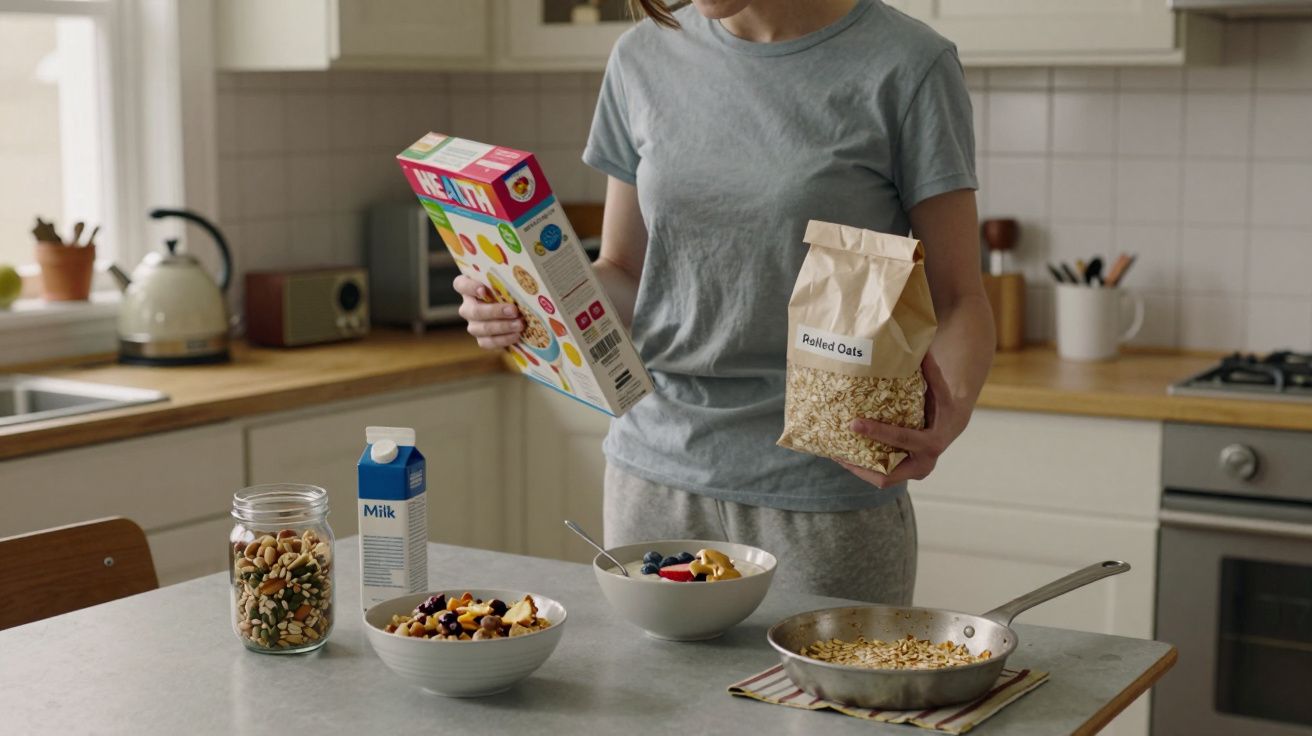
The supermarket own‑brand item nutritionists prefer over pricey “health” cereals
The bright boxes make big promises: protein, ancient grains, gut‑friendly crunch. The price tags quietly join in. Yet when you ask dietitians what actually lands in their trolleys, many point to something that sits low on the shelf, in a muted bag, with no influencer on the front.
It’s the plain supermarket own‑brand oats. Not the honey‑cluster granola, not the protein‑puffed flakes. Just rolled or porridge oats for well under £1 a kilo.
It looks too boring to be a “health food”, which is partly why it works so well.
Why the humble bag of oats beats most “health” cereals
A lot of “better‑for‑you” cereals lean hard on appearances. They swap cartoon mascots for earthy fonts, add a drizzle of chic ingredients like quinoa or coconut, and plaster the word “protein” on the front. Turn the box over and you still find a long list of ultra‑processed extras: glucose syrup, chicory root fibre, multiple sweeteners, sunflower oil, flavourings.
Oats are the opposite of that. A basic own‑brand bag often has one ingredient: whole rolled oats. No glaze, no frosting, no fortification confetti. For nutritionists, that simplicity is a red flag removed. It means you know what you’re getting: wholegrain carbs, a useful hit of protein, and a special kind of fibre called beta‑glucan that helps lower cholesterol.
Price matters too. Clients on a budget can’t always justify £3–£5 a box for fancy granola that vanishes in five breakfasts. A 75p–£1 bag of oats can stretch to dozens of bowls, flapjacks and savoury bakes. Dietitians care about what you can actually stick with on a Tuesday, not just what looks virtuous on Instagram.
The quiet rule many nutritionists use: if a cereal needs hard‑selling on the front, flip it over and read the back very slowly.
When you do that with oats, there isn’t much to read. That’s the point.
The “boring” nutrient profile that keeps you full
Own‑brand oats don’t shout, but the numbers are quietly solid. Per 40 g dry serving you usually get around:
- 5 g protein
- 4 g fibre (much of it the cholesterol‑friendly beta‑glucan)
- Slow‑release carbohydrates with a naturally low sugar content
Compare that to a “protein granola” that might give you:
- 8–10 g protein (once you factor in milk, oats are not far behind)
- 6–8 g sugar, often from syrups or added sugar
- 200+ calories for what looks like a small portion
The texture matters in real life. Porridge takes time to eat and sits warmly in the stomach, which nudges satiety hormones that whisper “we’re fine, we can get on with the day”. Flakes that disappear in three bites, however “healthy”, don’t give your body the same signals.
Nutritionists like foods that behave well, not just look good on a label. Oats are slow, steady and hard to over‑pour once you know what a portion looks like.
A quick label check when cereal shopping
Use oats as your benchmark and let other cereals audition against them:
- Sugar: aim for under 5 g per 100 g for an everyday option
- Fibre: at least 6 g per 100 g (oats often beat this)
- Ingredients: closer to “stuff you recognise”, fewer lines of text
If a cereal fails all three, it’s a sometimes treat, not a breakfast staple.
How nutritionists actually turn cheap oats into breakfast
The health win isn’t just the base ingredient; it’s how easily oats bend to your needs. Dietitians rarely eat them “plain mush in milk” every day. They tweak texture, toppings and temperature to keep boredom at bay.
Think of a basic 40–50 g portion of dry oats as your canvas, then:
- Add protein: Greek yoghurt, a scoop of plain protein powder, cottage cheese, eggs on the side, or a spoon of nut butter
- Layer fibre: grated apple or pear, berries (frozen are fine), ground flaxseed, chia seeds
- Bring flavour, not sugar: cinnamon, ginger, vanilla extract, cocoa powder, citrus zest
In practice that looks like:
- Hot porridge: oats simmered in milk or a fortified plant drink, topped with a spoon of peanut butter and a handful of berries
- Overnight oats: oats soaked in milk with yoghurt, chia and fruit, ready in the fridge for bleary mornings
- Savoy porridge twist: oats cooked with stock and an egg, finished with a little cheese and black pepper for a savoury, risotto‑style bowl
Dietitians like that you can push the meal in different directions-higher protein, more fibre, lower sugar-without needing a new product every time.
A tiny upgrade that makes oats even more useful
Toast them dry in a pan for a few minutes before cooking. That nutty flavour tricks your brain into feeling it’s eating something more indulgent, with no sugar added. It’s a small sensory hack with a big compliance pay‑off.
Own‑brand vs branded: what are you actually paying for?
The gap between a 75p own‑brand oat bag and a £2 branded one is often marketing, not meaning. Legally, rolled oats have to meet the same basic standards. What changes is:
- The milling (how fine or chunky they are)
- Any added flavouring or vitamin fortification
- The packaging and brand campaigns
Nutritionists will sometimes choose specific types-steel‑cut for slower digestion, jumbo for texture-but rarely because of the logo. If you tolerate gluten poorly, they might suggest certified gluten‑free oats, which are more about how they’re processed than about nutrients.
With “health” cereals, most of the extra cost is in:
- Mixed nuts and seeds (which you can add yourself, more cheaply, from bulk bags)
- Sweet add‑ins like honey clusters, chocolate curls, dried fruit
- Branding that leans heavily on wellness buzzwords
One dietitian’s rule of thumb: buy the simple base (own‑brand oats) and spend the saving on good add‑ons (nuts, seeds, frozen berries).
That swap quietly shifts control back to you. You dictate the sugar and fat levels instead of accepting the blend the manufacturer needs to keep everything clumping nicely in a box.
Quick comparison
| Option | Pros | Watch out for |
|---|---|---|
| Own‑brand plain oats | Cheap, wholegrain, versatile, minimal processing | Need toppings for flavour and extra protein |
| “Protein” granola | Convenient, crunchy, higher protein | Often high in sugar, pricey, easy to overeat |
| Flavoured “healthy” flakes | Fortified, familiar texture | Added sugars/sweeteners, low fibre |
When “healthy cereal” still wins - and how to choose it
Nutritionists aren’t anti‑cereal. Life is busy, kids are picky, and sometimes pouring from a box is what keeps breakfast happening at all. In those cases, they use oat‑like rules:
- Fibre first: target cereals with at least 6 g fibre per 100 g
- Sugar sane: under 10 g sugar per 100 g for everyday use
- Short-ish list: keep additives, flavourings and oils modest
Wheat biscuits, plain bran flakes and some own‑brand “no added sugar” mueslis can pass the test. You can then add a spoon of oats on top, or use oats later in the day (for example, in homemade snack bars) to raise overall fibre.
What they tend to avoid are:
- Cereals where sugar, syrup or honey are in the first three ingredients
- Products that rely on sweeteners plus “health halo” words like “slim”, “detox”, “low‑guilt”
- Clusters that are clearly held together with syrup and oil, however natural the branding
The message isn’t “never”, it’s “know what job this cereal is doing”. If it’s pudding disguised as breakfast, have it sometimes and enjoy it as such.
How to make the switch from fancy boxes to own‑brand oats
Taste and habit, not just knowledge, keep people loyal to pricier cereals. Nutritionists often suggest a gradual shift rather than a dramatic bin‑and‑replace.
Try:
- Blend first: mix your usual cereal half‑and‑half with dry oats. That dials down sugar and price without shocking your palate.
- Upgrade the toppings: when the box runs out, replace it with nuts, seeds and fruit on top of oats.
- Change one breakfast a week: make an “oat day” routine you actually look forward to-specific mug, favourite podcast, a cinnamon‑heavy bowl.
- Keep a back‑up box: having a beloved cereal in the cupboard can stop you feeling deprived, even if you reach for oats most days.
After a fortnight or so, many people notice the difference on days they go back to sugary cereals: sharper hunger, energy dips, slightly wired feeling. That feedback is often more persuasive than any textbook.
The aim isn’t to win at porridge. It’s to have a breakfast that quietly does its job, then gets out of the way so you can get on with yours.
FAQ:
- Are supermarket own‑brand oats as healthy as branded ones? Yes. For plain rolled or porridge oats, the nutritional differences are usually tiny. You’re mostly paying for branding and packaging with premium lines.
- Do I need “gluten‑free” oats? Only if you’re coeliac or have been advised to avoid gluten by a specialist. Otherwise, standard oats are fine for most people.
- Won’t I get bored of porridge every day? You might if you never change it. Rotate between hot porridge, overnight oats and savoury versions, and vary toppings-spices, fruit, nuts and seeds-so it feels more like a category than a single dish.
- Is granola always a bad choice? No, but it’s dense. Use smaller portions (30–40 g), treat it more like a crunchy topping over yoghurt and fruit, and check the sugar and oil content.
- Can oats fit into a weight‑loss plan? Often yes. Their fibre and texture help keep you full, especially when paired with protein. Just measure portions and be mindful with calorie‑dense add‑ins like nut butter and honey.




Comments (0)
No comments yet. Be the first to comment!
Leave a Comment