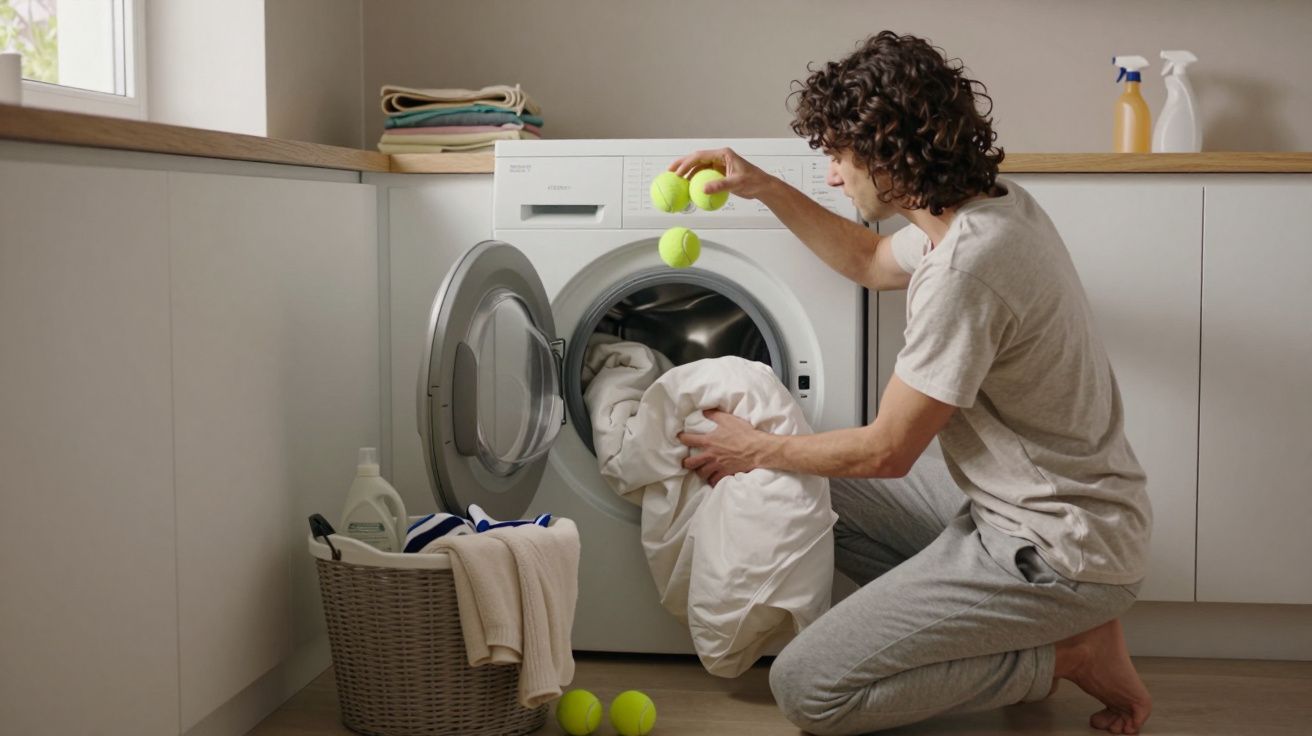
This old tennis ball trick makes tumble‑dried duvets fluffier and lighter
The drive for quicker laundry routines has made tumble dryers a fixture in many homes, even as people quietly wish their bedding came out lighter, airier and less creased.
One very simple addition to the drum changes how a duvet behaves in the heat.
Instead of clumpy filling and heavy, slow‑drying corners, a few old tennis balls can help coax the loft back into tired fibres. The trick has circulated among cleaners, hotel laundries and parents for years. It remains underused in everyday households, largely because it sounds stranger than it is.
Why duvets slump in the dryer
Modern duvets rely on trapped air, not weight alone, to feel warm. Whether filled with down, feather or synthetic fibres, they work best when the filling sits evenly across the whole surface. Washing and drying disturb that structure.
Inside a spinning drum, wet filling drifts into dense pockets. Moisture makes fibres cling together, and as the duvet tumbles, centrifugal force pushes them towards seams and corners. The result is flat patches next to overstuffed lumps, even when the fabric shell still looks smooth from the outside.
A flattened duvet usually signals compacted filling, not a loss of quality.
Traditional shaking helps, but only up to a point. Once clumps set during drying, it takes a lot of manual effort to redistribute them. The tennis ball method adds mechanical help right where the problem forms: inside the drum, while heat and movement can still reshape the fibres.
What the tennis balls actually do
Tennis balls act as small, firm massagers for your duvet. As the drum turns, each ball bounces around, repeatedly striking and lifting the fabric. This breaks up wet clumps, opens channels for warm air and prevents the filling from settling into one heavy layer.
Three things happen at once:
- Impact: light pummelling loosens compacted fibres.
- Separation: balls wedge briefly between folds, stopping them from sticking together.
- Airflow: extra space between layers lets hot air circulate more freely.
The effect feels modest when you peer through the door. Over a full cycle, however, the thousands of tiny taps add up. Compared with drying a duvet alone, you often see fewer cold spots, less “quilting” where there should be smooth filling, and a noticeably plumper feel when you shake it out.
The goal is not speed at all costs, but a more even, resilient loft without resorting to professional equipment.
How to use tennis balls in the dryer
The practical setup stays simple, provided you respect the duvet’s care label and your dryer’s capacity. Overloading undermines the trick, because the balls need space to move.
Step‑by‑step method
- Check the label: confirm the duvet is tumble‑dry safe and note the recommended temperature.
- Load the drum loosely: place the duvet in without forcing it; large doubles may need a commercial machine.
- Add 2–3 clean tennis balls: for king‑size or very dense duvets, up to 4 can help.
- Choose a low to medium heat: higher heat risks damaging synthetic fillings or shrinking covers.
- Run a timed cycle: start with 30–40 minutes, then check progress.
- Pause and shake: roughly halfway through, remove the duvet, shake it vigorously, then return it with the balls for a second round.
If the duvet still feels damp at the seams, shorter top‑up cycles work better than one long blast. The balls continue to do their separating work each time, while lower heat protects delicate fillings.
A quick comparison of outcomes
| Drying method | Typical result | Main risk |
|---|---|---|
| Dryer, no balls | Flat areas, clumps at corners | Uneven warmth, early wear |
| Dryer + tennis balls | Fluffier, more even loft | Extra noise in the drum |
| Air‑dry only | Gentle on fibres | Very long drying time, risk of musty smell |
Choosing and preparing the right balls
Not all balls are equal when they slam against your bedding for an hour. The classic yellow tennis ball remains the most common choice, but a little preparation avoids colour transfer and unpleasant odours.
Opt for:
- Clean balls: new or thoroughly washed to remove court dust and surface dirt.
- Colour‑fast covers: avoid very cheap, strongly dyed balls that might shed.
- Solid bounce: old, completely flat balls do less work in the drum.
Some people slip each ball into a clean sock and knot the end. This softens direct impact, limits fluff transfer and slightly reduces noise, while leaving enough firmness to separate the duvet filling. Dedicated dryer balls made from rubber or wool serve a similar purpose, though standard tennis balls often work just as well for larger items like duvets.
Protecting delicate duvets and fillings
Down, feather and high‑loft synthetic duvets all benefit from gentle treatment. While the tennis ball trick helps revive loft, it must sit within the limits of heat and spin that the filling can tolerate.
For down or feather:
- Use the lowest heat setting and longer cycles.
- Add an extra ball or two to help break up damp feather clusters.
- Finish with a period of air drying on a rack or clothes horse to release residual moisture.
For synthetic hollowfibre or microfibre:
- Stick to medium heat at most; high heat can melt or deform fibres.
- Check seams periodically; overstuffed drums strain stitching.
In both cases, the final shake makes a difference. Grasp the duvet firmly by two corners, snap it downwards several times, then work along the edges. This encourages any remaining compacted filling to redistribute while it is still warm and flexible.
Small additions that amplify the effect
The tennis ball trick sits alongside a few other low‑effort tweaks that nudge duvets towards that hotel‑bed feel rather than student‑flat fatigue. Minor adjustments at the washing stage often change the drying outcome.
Consider:
- Using a gentle, minimal‑foam detergent to avoid residue that weighs fibres down.
- Adding an extra rinse to remove soap trapped inside thick quilting.
- Spinning at a higher speed before drying, provided the label allows it.
Less trapped water at the start means less time in the dryer and less stress on the filling.
Some households also slip a dry, clean towel in with the duvet for the first 15–20 minutes. The towel absorbs moisture early on, slightly shortening the overall cycle. Once partially dry, removing the towel and leaving the tennis balls to finish the job prevents over‑crowding in the drum.
When the trick is not enough
The tennis ball method improves how existing filling behaves. It cannot compensate for duvets that have simply reached the end of their useful life. If the duvet remains flat even after careful washing, thorough drying with balls and firm shaking, the internal fibres may be broken or permanently matted.
Signals that it may be time to move on include:
- Visible thin spots where light shines through more easily.
- Persistent cold patches despite even stitching.
- Lumps that return instantly after reshaping.
At that stage, preserving fluffiness becomes less efficient than replacing the duvet with one suited to your climate and washing habits. Future care, including the tennis ball routine, then helps the new piece keep its loft for longer rather than trying to repair damage too late.
FAQ:
- Will tennis balls damage my dryer or duvet? Used in sensible numbers with a not‑overloaded drum, tennis balls are generally safe. The main side effect is extra noise. Respect the temperature and load limits on both the duvet and the appliance, and avoid balls with damaged rubber or loose outer layers.
- Can I use wool dryer balls instead? Yes. Wool dryer balls perform a similar separating and softening function and are quieter. For very thick duvets, combining them with one or two tennis balls can increase impact without much extra wear.
- Does this work for pillows and mattress toppers too? The method helps many washable pillows and some toppers, as long as they are labelled tumble‑dry safe and the drum is large enough. Dry smaller items with fewer balls to prevent over‑agitation.
- How often should I wash and tumble‑dry a duvet? For most households, once or twice a year suffices, with spot cleaning in between. Those with allergies or pets may opt for more frequent washing, but gentle cycles and low heat remain important to protect the filling.




Comments (0)
No comments yet. Be the first to comment!
Leave a Comment