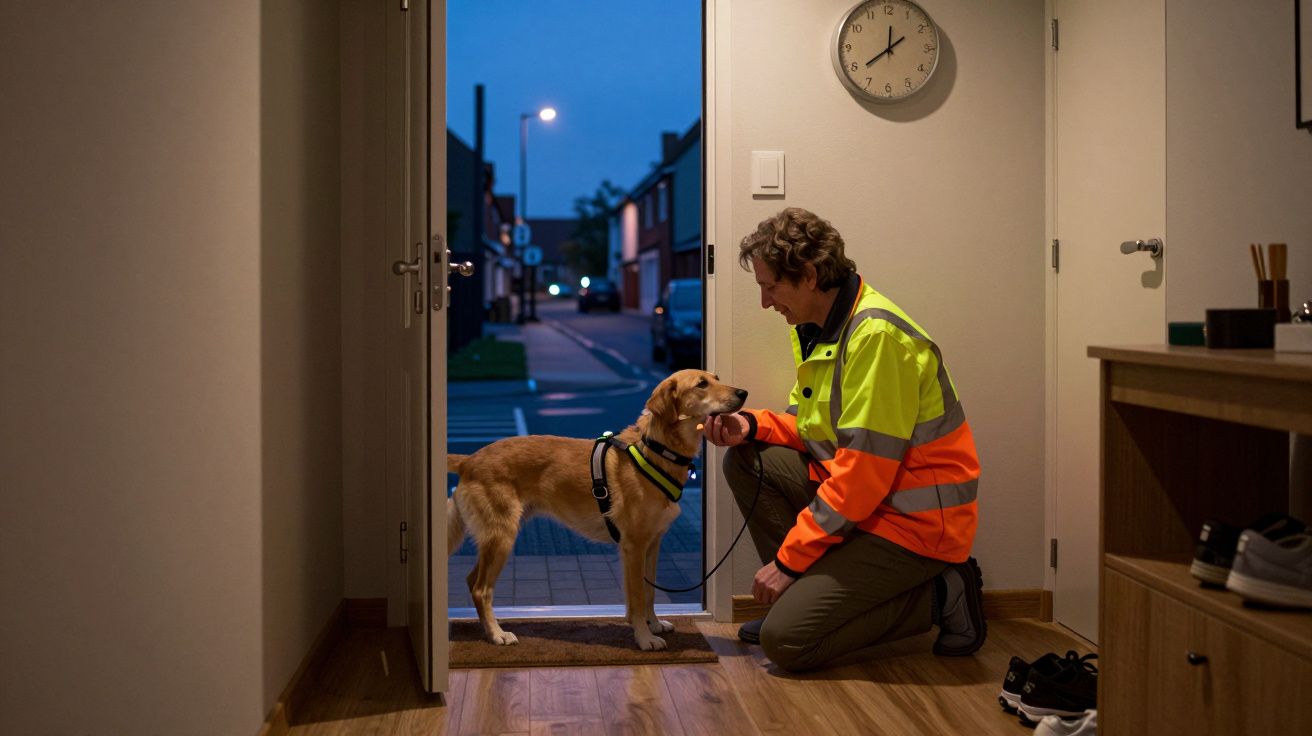
Veterinary nurses explain why some dogs suddenly refuse walks when clocks change – and how to help them adjust
When the clocks change, some dogs change with them. A dog that trotted happily round the block last week now plants their feet at the front door, or drags behind you at a time of day they usually love. It can look like stubbornness or “moodiness”. Veterinary nurses say it is usually stress, body-clock confusion, or pain brought into sharper focus by the new routine.
A dog does not understand British Summer Time. They understand light, timing, smell, and the tiny rituals that wrap your day. Shift those by an hour and some nervous systems protest.
A sudden stop on walks after the clocks change is rarely your dog “being awkward”. It’s their body and brain asking for a slower adjustment.
What actually changes for your dog
Daylight saving changes human clocks, not sunrise. Yet your dog experiences several quiet disruptions at once. Their first wee, breakfast, walk, and your comings and goings all slide by sixty minutes on the clock – and sometimes much more in real life when your work pattern follows.
Hormones such as cortisol and melatonin follow light and routine. When walk time jumps earlier into the dark, or later into busy rush hour, some dogs meet more noise, people, headlights and smells than they are ready for. For anxious, elderly, or sensitive dogs, that extra stimulation can tip a normal stroll into something that feels unsafe.
Older dogs and those with joint disease often feel stiffer in chilly, darker hours. A dog who coped with a 7am walk in September may find a 6am, pre-dawn version painful in October. Pain links quickly to place in a dog’s mind. If “the walk” starts to mean “this hurts”, refusal follows.
Common signs the clock change is the trigger
Not every walking wobble is about the hour. Veterinary nurses look for patterns. The red flag is a sudden, clock-linked shift in behaviour with no obvious injury or illness.
You might notice:
- A cheerful dog who abruptly balks at the door around the new walk time.
- Slowing, panting or “freezing” on parts of a route that now fall in darkness or heavy traffic.
- Pacing, clinginess or restlessness at the old walk time, as if they are waiting for something that never comes.
- House-soiling or accidents because toilet breaks moved without a gradual lead‑in.
If things settle back to normal after a week or two of gentle support, the clock change was likely the main stressor. If they worsen or your dog seems painful or unwell, nurses urge you to involve your vet team promptly.
Why some dogs struggle more than others
Two dogs in the same home can react very differently. Veterinary nurses often see patterns tied to age, health and temperament rather than training “discipline”.
Nervous or previously worried dogs
Dogs that already find the world a bit much may cope when routes feel predictable. Shift walk time into busier streets or darker conditions and their coping margin shrinks. Headlights, early buses, foxes, bins and new smells appear where calm pavements used to be.
Puppies and adolescents
Young dogs depend on repetition to feel safe. When clocks change, the environment can look and smell unfamiliar at “the same time”. Teen dogs already juggling hormones may show their overwhelm as pulling, barking or digging in their heels.
Senior dogs and those in pain
Arthritis, spinal issues and undiagnosed dental or ear pain all feel worse in cold, damp or low‑light conditions. A dog that used to trot out happily at 7pm may refuse the new, darker 6pm outing because their body now associates that slot with discomfort.
Even subtle vision or hearing loss can make dusk and dark streets disorientating. A senior spaniel who navigated fine in daylight may suddenly spook at moving shadows when your routine shifts.
When behaviour changes fast, every veterinary nurse thinks “pain and fear” before “naughty”.
How to prepare before the clocks move
The smoothest clock change is the one your dog barely notices. Nurses suggest a short, practical lead‑in each autumn and spring rather than a big, single jump.
- Shift walk and meal times by 10–15 minutes every few days in the fortnight before the change.
- Keep your pre‑walk rituals – harness, lead, cue word, treat – in the same order, just nudged slightly earlier or later.
- If the new routine means more dark walks, start sampling that earlier. Add one short, low‑pressure evening or early‑morning stroll each week so night‑time is not a total surprise.
- Review kit: reflective harness, a well‑fitting collar, your own hi‑vis layer and a head torch all reduce startle moments.
A slow slide gives your dog’s internal clock and joints time to adjust, especially if they are ageing or on long‑term medication.
Gentle fixes once your dog is refusing
If the clocks have already changed and your dog has dug in their paws, you can still reset things. The aim is to rebuild your dog’s sense that leaving the house is safe and rewarding.
Start with comfort and a health check
Before training, rule out pain. Veterinary nurses regularly see “sudden stubbornness” that turns out to be sore hips, a bad tooth, or a flare of ear disease made worse by cold or wind.
Book a vet check if:
- The change in behaviour is very sudden or dramatic.
- Your dog limps, licks joints, hesitates on stairs, or struggles to jump into the car.
- They pant, whine, or seem restless at home as well as outside.
Once pain is managed, their willingness to walk often returns quickly.
Shrink the walk, grow the reward
For fearful or confused dogs, distance is less important than a series of small, safe wins. Walking to the end of the drive and back, then easing further over days, is better than dragging them round the usual loop.
Try this:
- Break the outing into tiny steps: door threshold, front path, first lamp-post.
- Pair each step with something your dog adores: soft treats, calm praise, a favourite toy.
- Turn back before they hit full panic or complete refusal, so the memory of the walk ends while they still feel confident.
Consistency matters more than drama. Five calm five-minute outings beat one stressful half hour.
Tweaks that make dark walks less scary
Darkness and noise are the big sensory shifts when clocks change. You can’t alter sunrise, but you can alter how the environment feels to your dog.
- Choose quieter routes at the new time, even if that means repeating a small loop.
- Avoid busy junctions and narrow pavements during school run or rush hour if they rattle your dog.
- Stay chatty. Your voice acts as a moving anchor, especially for dogs with fading eyesight or hearing.
- Keep the lead short but loose to prevent startle lunges while still giving room to sniff and decompress.
Think of it as sensory editing. You are not forcing your dog to “face their fears” in one go; you are lowering the intensity so they can learn the new pattern without overload.
When walks move into real darkness
In winter, many people have no choice: the only weekday walks are in the dark. Veterinary nurses say planning and pacing help dogs accept this with less drama.
Light and visibility
Dogs generally see better in low light than we do, but they still benefit from predictable outlines and safe footing.
- Use a steady light rather than flashy modes, which can worry some dogs.
- Stick to routes you know are clear of potholes and clutter.
- Keep gear comfortable; cold metal or stiff straps can rub more when dogs tense in the dark.
Pacing and timing
Shorten walks at first, then build up as your dog relaxes. You might keep a longer play session or enrichment indoors so movement needs are still met without pushing through fear outside.
Remember that sniffing tires your dog mentally more than marching. Ten minutes of slow, allowed sniffing in a quiet area may leave them happier than thirty minutes of brisk, anxious marching.
Indoor alternatives on hard days
Some days the dark, weather and your dog’s stress level all stack against you. Missing the occasional walk is not a failure if you replace it with something that still meets their needs.
Options include:
- Scatter-feeding or treat-search games around the house.
- Simple scent work: hide a favourite toy or food in boxes or under plant pots.
- Short training sessions (sit, stay, paw, nose‑touch) using reward‑based methods.
- Tug, fetch in a hallway, or gentle “find it” games on stairs where safe.
These keep the brain busy and protect the positive association with walks, rather than forcing a battle your dog is not ready for that day.
Simple routine planner
A few small adjustments can make the post‑clock-change weeks calmer for both of you.
| Step | What to do | Why it helps |
|---|---|---|
| 1 | Shift walks by 10–15 minutes over 1–2 weeks | Lets body clock and joints adjust slowly |
| 2 | Add one short dark‑time walk before the change | Makes new lighting and sounds less shocking |
| 3 | Check pain and vision with your vet if behaviour shifts fast | Rules out hidden medical triggers |
| 4 | Use shorter, reward‑heavy walks after the change | Rebuilds confidence at the new time |
| 5 | Add indoor enrichment on tough days | Meets needs without overwhelming your dog |
When to ask for extra help
If your dog growls, snaps, or panics on walks after the clocks change, you do not have to manage it alone. Veterinary nurses often work alongside qualified behaviourists to design step‑by‑step plans.
Seek professional help if:
- Your dog’s fear lasts more than a couple of weeks despite gentle changes.
- They refuse all walks, lose weight, or seem withdrawn at home.
- You feel anxious or unsafe taking them out.
Calm, consistent changes and a health‑first mindset usually get most dogs through the seasonal shift. You do not need to “toughen them up”; you need to listen to what their behaviour is telling you.
FAQ:
- Is my dog just being stubborn about walks after the clock change? Refusal usually signals fear, confusion or discomfort rather than stubbornness. Clock changes alter light, routine and sometimes pain levels; ruling out medical issues and then adjusting gently is kinder and more effective than forcing the issue.
- How long should it take my dog to adjust to the new time? Many dogs settle within one to two weeks if you shift routines gradually and keep walks positive. If your dog is still very anxious or resistant after this, or gets worse, speak to your vet team.
- Should I skip walks completely if my dog is very frightened in the dark? You can shorten or temporarily replace some walks with indoor enrichment while you work on confidence. The goal is not to avoid outdoor time forever but to reduce intensity while you slowly reintroduce calm, low‑pressure outings.
- When should I see the vet about walk refusal? Book a check as soon as walking changes are sudden, severe, or paired with signs of pain, weight loss, drinking changes, or behaviour shifts at home. Early assessment can catch arthritis, sensory loss or other issues that the clock change has simply brought to light.

Comments (0)
No comments yet. Be the first to comment!
Leave a Comment