Why hanging washing on radiators makes windows stream with condensation – and the rack fix that avoids it
He drapes a heavy hoodie over the hall radiator, socks tucked along the top like bunting. By the time he’s made tea, the double glazing is running with water. He wipes a sleeve across the glass, shrugs, and tells himself it’s just winter.
By March, the paint under the sill has bubbled. The silicone looks grubby; a dark fuzz has taken hold at the corners. The heating bill feels higher than it should be. Nothing obvious has changed, except the quiet habit of turning radiators into laundry horses whenever the forecast says rain.
There’s a reason windows react so quickly when you dry clothes this way. And there’s a simple rack‑and‑room tweak that keeps the laundry routine and loses the indoor drizzle.
Where all that water goes when you “just dry a load”
A full washing machine load can hold one to two litres of water even after a good spin. On a heated towel rail, that moisture has a straightforward route out if the bathroom fan is decent. On a living room radiator with closed windows, it has nowhere to go but the air.
Warm air holds more moisture than cold air. Put wet cotton directly onto a hot panel and you turbo‑charge evaporation, loading the room air with water vapour in an hour instead of over a slow day. The air feels cosy, even a little “fresh”. The physics is less friendly.
When that warm, damp air meets a cold surface – usually the window glass, sometimes an external wall or a cold corner behind furniture – it cools. Cool air can’t carry as much water. The excess condenses into droplets. First a mist, then beads, then streaming rivulets that soak the timber and the sealant below.
Your windows aren’t “sweating”. They’re simply the coldest part of the room, so they get handed everyone else’s water.
Why radiators make the problem worse than a rack
Drying clothes indoors always adds moisture, but radiators concentrate the effect. It’s not only about the water in the fabric; it’s also about where the heat goes.
Cover a radiator with a duvet cover or towels and you trap the heat against the wall. The metal still gets hot, but the warm air you’re paying for doesn’t circulate into the room as designed. The flow turns patchy. The thermostat might see a cool room and run the boiler longer, using more gas or electricity just to fight through your washing.
At the same time:
- The wet fabric creates a small, very humid zone right against the wall.
- Airflow is blocked, so that humid air lingers in one place.
- The nearest cold surface – often a window, external wall, or uninsulated corner – catches the fallout in the form of condensation.
It’s why you see mould blooming not just on glass seals but behind sofas, wardrobes and beds too. The damp air from your radiators roams, then settles wherever the wall is coldest and the air can’t move.
Condensation, mould, and the hidden cost of “just this once”
We’ve all had that moment where you think, “It’s only one load; it’ll be fine.” In a well‑ventilated, well‑insulated house, occasionally it is. In a typical UK flat with single trickle vents and patchy insulation, that “only one load” often coincides with steamed‑up glass, black spots in silicone, and paint that never quite dries at the skirting.
Condensation on its own is a symptom, not the villain. The trouble starts when surfaces stay damp for hours. That gives mould spores – already floating in your indoor air – a stable landing pad. They don’t need floods; they thrive on regular micro‑wetness.
Over time, that means:
- Perishing seals around windows and in corners.
- Musty smells in soft furnishings near cold walls.
- Aggravated asthma and allergies, especially in bedrooms with shut doors and radiators used as drying rails.
Let’s be honest: nobody opens all the windows wide on a January evening just to dry a jumper. The solution has to work with real habits, not against them.
The rack‑and‑room tweak that cuts condensation
The fix isn’t “never dry indoors”. It’s changing how and where the moisture enters the room, and giving it an exit. Think of it as a small layout and timing upgrade, not a lifestyle overhaul.
Swap the radiator drape for this pattern:
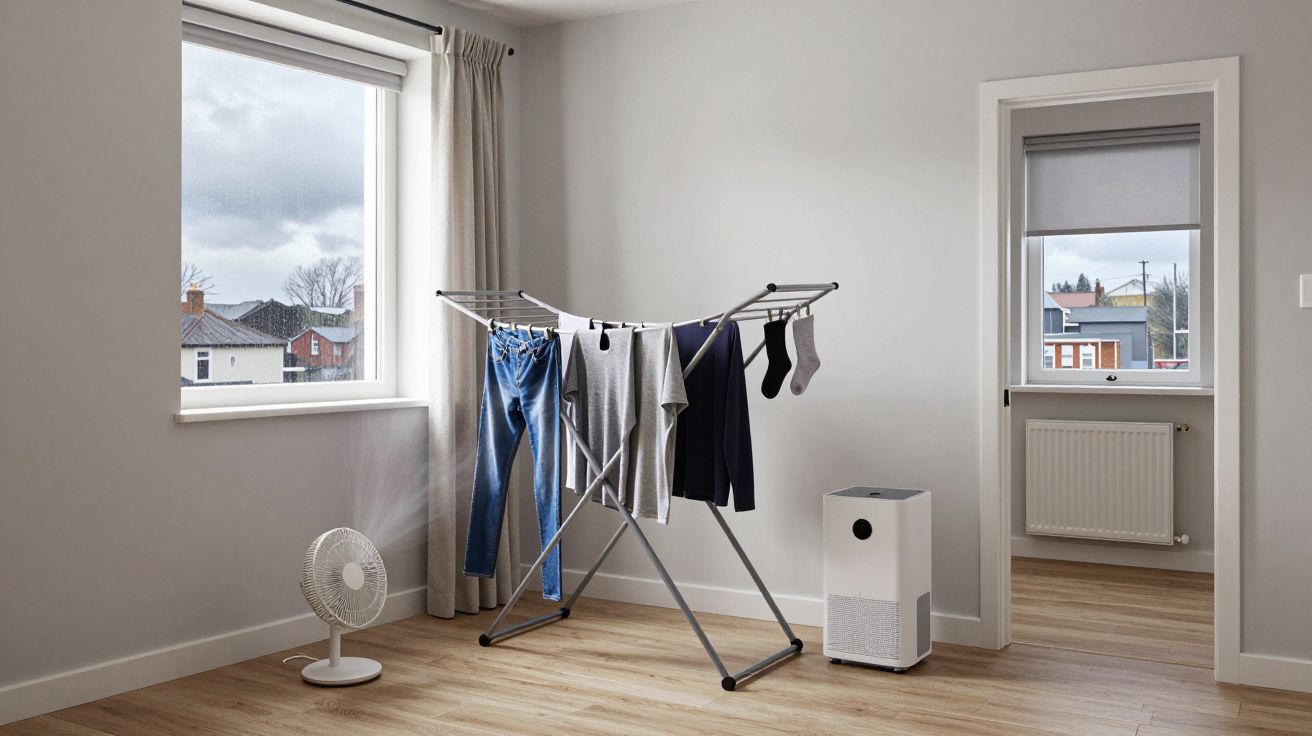
Use a free‑standing airer, not the radiator itself.
Choose one with space between bars so clothes don’t overlap too thickly. Airflow matters more than direct heat.Place it in the best “sacrifice” spot.
A room you can partially shut off and ventilate is ideal: kitchen with an extractor, spare room, or bathroom with a decent fan. Keep the rack away from external corners where walls are coldest.Pair drying with controlled ventilation.
Crack a window in that room to a small opening, or open trickle vents fully. If there’s an extractor fan (kitchen or bathroom), run it on a low, steady setting rather than quick blasts.Use background heat instead of radiator contact.
You don’t need the rack pressed against a radiator. Heating the room gently to 18–20°C and moving air with a small fan dries clothes surprisingly fast without drenching the windows.Time your loads with the weather and your routine.
Start a wash so the heaviest drying happens when you’re awake and can ventilate, not overnight with doors closed and curtains drawn tight over wet glass.
The difference is simple: instead of forcing litres of moisture into a single crowded zone, you let it disperse slowly into a space that can actually get rid of it.
“I tell tenants: pick one ‘drying room’ and treat it like a mini laundry,” says a London letting agent who’s seen more mouldy bays than he cares to count. “Rack in the middle, vent on, door almost closed. The rest of the flat stays drier.”
Small upgrades that make indoor drying much kinder
You don’t need a heat‑pump dryer to get on top of condensation. A few low‑tech tweaks, stacked together, change the whole picture.
Spin harder before you start.
If your machine has a higher spin setting and your fabrics can take it, use it. Every extra 400 rpm can pull out a surprising amount of water before it ever reaches the air.Try a heated airer with discipline.
On a timer and with a cover designed for it, a heated rack dries clothes faster than a cold one without blocking your radiators. Use it in that same “sacrifice” room with some ventilation; don’t park it in a sealed bedroom.Borrow gentle airflow.
A quiet desk fan on low, aimed past the rack rather than directly at it, keeps vapour moving towards an open window or vent. The air should skim the clothes, not batter them.Keep curtains and blinds slightly off the glass.
A small gap at the top or bottom lets air move over the window so moisture doesn’t sit trapped against a freezing pane.Consider a dehumidifier if you dry indoors often.
Place it in the same room as your rack, set to around 50–55% relative humidity, and close the door most of the way. It will pull litres of water out of the air that would otherwise end up on your walls.
Typical drying setups – and what they do to your home
| Setup | What happens to moisture | Likely result |
|---|---|---|
| Clothes directly on radiators, windows closed | Vapour dumps into main living spaces, hits cold glass | Fast drying, heavy condensation and mould risk |
| Rack in living room, no ventilation | Slower vapour release, but nowhere for it to go | Lingering damp air, fogged windows, clammy feel |
| Rack in one room, window cracked, fan on | Moisture steered towards exit or dehumidifier | Manageable humidity, much less condensation |
| Tumble dryer vented or condenser in use | Moisture mostly contained or pumped outside | Minimal impact on windows, higher energy use |
Making peace with winter washing
UK winters aren’t kind to washing lines. Rain, short days, and tiny balconies make indoor drying the default for months. The aim isn’t to feel guilty every time you hang a pair of jeans; it’s to understand where the water will go, and nudge it somewhere less harmful.
Think in three steps:
- Limit the load: spin well, don’t overload rooms with three airers at once.
- Choose the room: one space that can be vented or dehumidified, not every radiator in the house doing its own thing.
- Give moisture a way out: crack a window, run an extractor, or let a dehumidifier earn its keep.
If the glass is running every morning and the silicone is spotting black, that’s your house quietly telling you the current system is saturating it. Shift the drying off the radiators, shuffle the rack, and add a small path to the outside. Your windows should go back to showing the weather, not becoming it.
FAQ:
- Is it ever OK to dry clothes on radiators?
Occasionally, in a well‑ventilated room, one light item probably won’t cause major trouble. As a habit with full loads, especially in small or poorly ventilated homes, it drives condensation and mould.- Will opening the window “waste” all my heating?
A small, steady opening in one room while the rest of the home stays closed is a good compromise. You lose some heat, but you avoid the bigger cost of damp walls, damaged decor, and health issues.- Are dehumidifiers really worth it for drying?
In many UK homes, yes. Run in the same room as your rack, they often cost less per hour than a tumble dryer and can halve drying times while protecting walls and windows.- Why do my bedroom windows mist more than the lounge?
Bedrooms are cooler, doors are often shut at night, and you add moisture by breathing. If you also dry clothes there or keep curtains tight to the glass, condensation builds quickly.- Can double glazing alone stop condensation?
It helps by keeping the inner pane warmer, but if indoor humidity stays high from constant indoor drying, even good double glazing will mist and sometimes drip. You still need ventilation and better drying habits.





Comments (0)
No comments yet. Be the first to comment!
Leave a Comment