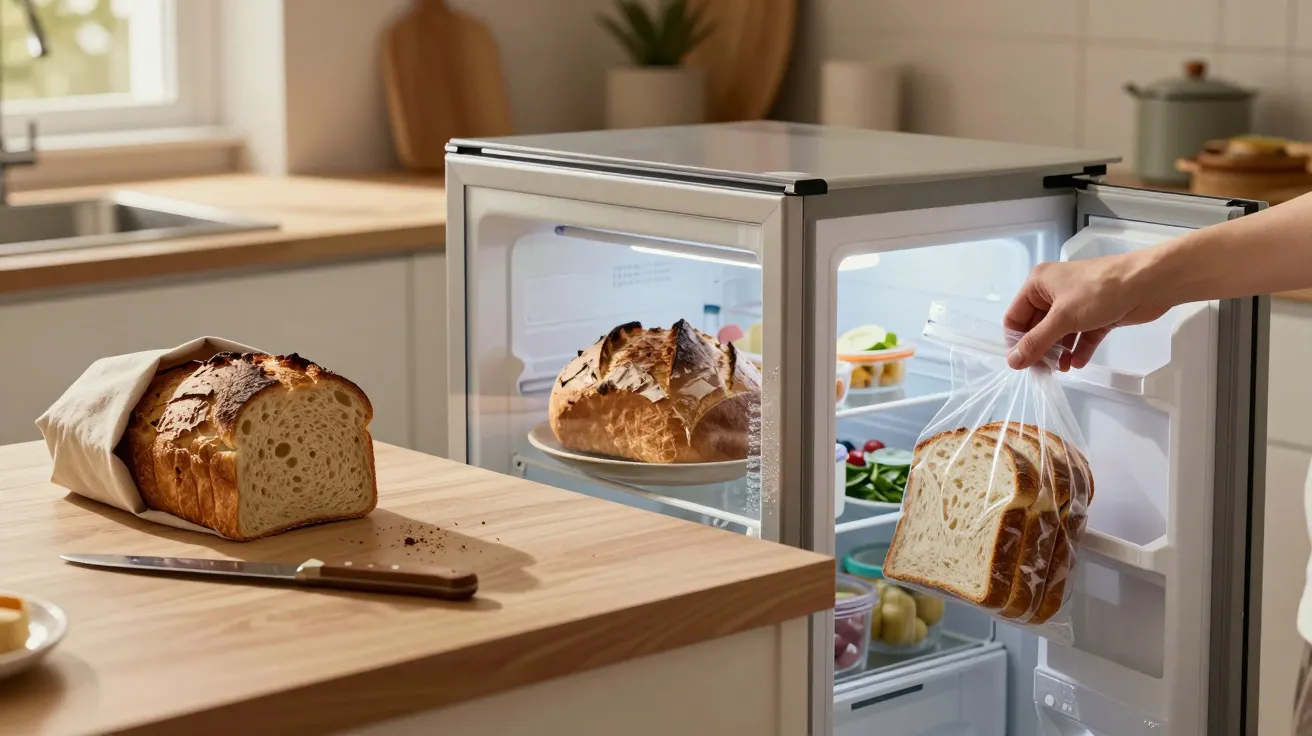
Why keeping your bread in the fridge actually makes it go stale faster, according to food scientists
Most people slide a loaf into the fridge thinking it will keep it fresh for longer. On paper, it sounds logical: colder equals slower spoilage. Yet food scientists have been repeating the same message for years: if you care about softness and flavour, your everyday bread does not belong in the fridge.
A quiet chemical shuffle inside the crumb explains why slices harden more quickly at fridge temperature than on the worktop. Understanding that shuffle helps you decide where to store each type of bread and when to reach for the freezer instead.
What “going stale” really means
Stale bread is not just “dry bread”. It is bread whose structure has changed.
Freshly baked, the starches in flour are swollen and disorganised, locked in place by water and heat from the oven. As the loaf cools and sits, those starch molecules begin to realign and pack together. Scientists call this retrogradation. To your teeth, it feels like firmness, crumbliness and a loss of that elastic, springy crumb.
Moisture does not simply vanish; much of it migrates from the soft interior towards the crust and the air. The loaf may still contain plenty of water, but it no longer feels soft because water is held differently in the structure.
Staling is a structural change in the starch and crumb, not just a question of “it’s gone dry”.
Why the fridge speeds staling instead of slowing it
Cold slows down many reactions in food, but bread staling is an exception.
Starch retrogradation happens fastest in the band just above freezing: roughly 0–10 °C. Those temperatures are ideal for starch molecules to line up and expel water from between their chains. A domestic fridge in the UK typically runs at about 4 °C. In other words, it sits almost exactly in the zone that encourages bread to firm up.
Leave the same loaf at normal room temperature, say 18–22 °C, and retrogradation occurs more slowly. The bread will still stale, but not as rapidly as it does on the middle shelf of the fridge.
The result is counter-intuitive: your careful “preservation” trick can make a sliced loaf feel old after a day or two, even if there is no mould in sight.
The trade-off: mould versus texture
The fridge does have one advantage. It slows down mould growth compared with a warm kitchen.
If you keep bread out of the fridge, you accept that the window of best texture may only be a couple of days, depending on the recipe and humidity in your home. In a very warm kitchen in summer, mould can appear faster on high‑moisture breads, especially if they are wrapped tightly.
So the choice is rarely between “fresh for a week” and “stale overnight”. It is a balance between softer crumb and lower mould risk.
What actually happens inside the loaf
The texture changes you feel at the knife and under your teeth have clear physical causes.
- Starch realignment: Amylopectin, one of the key starch components in wheat flour, slowly recrystallises as bread cools. This is the main driver of staling.
- Water migration: Water diffuses from the interior towards the crust and the surrounding air. The crumb loses its flexible, gel‑like feel.
- Crust softening: Initially crisp, the crust often softens as it picks up moisture from the crumb and the air, especially in plastic packaging.
At fridge temperatures, the rate of amylopectin recrystallisation peaks. The crumb firms up quickly. In the freezer, by contrast, the water is locked in ice crystals and molecular movement slows to a crawl, largely pausing the staling process.
In practice, a loaf in the freezer is often closer to “paused freshness” than one kept in the fridge.
Where each type of bread should live
Different breads behave differently, but the scientific principles stay the same. A few simple rules cover most everyday loaves.
Room temperature: best for short‑term eating
For breads eaten within 2–3 days:
- Standard supermarket sliced loaves.
- Crusty sourdoughs and boules.
- Baguettes and ciabatta.
- Rolls and baps.
Keep them:
- In a bread bin, cloth bag or paper bag to allow some airflow.
- Away from direct sunlight, radiators and the dishwasher vent.
- Well wrapped, but not sealed in damp conditions where condensation can form.
Conditions that are consistently cool, dry and shaded slow both staling and mould compared with a hot, steamy kitchen.
Freezer: the real “long‑life” option
For bread you will not finish within a few days, the freezer beats the fridge.
- Slice the loaf first, or separate rolls.
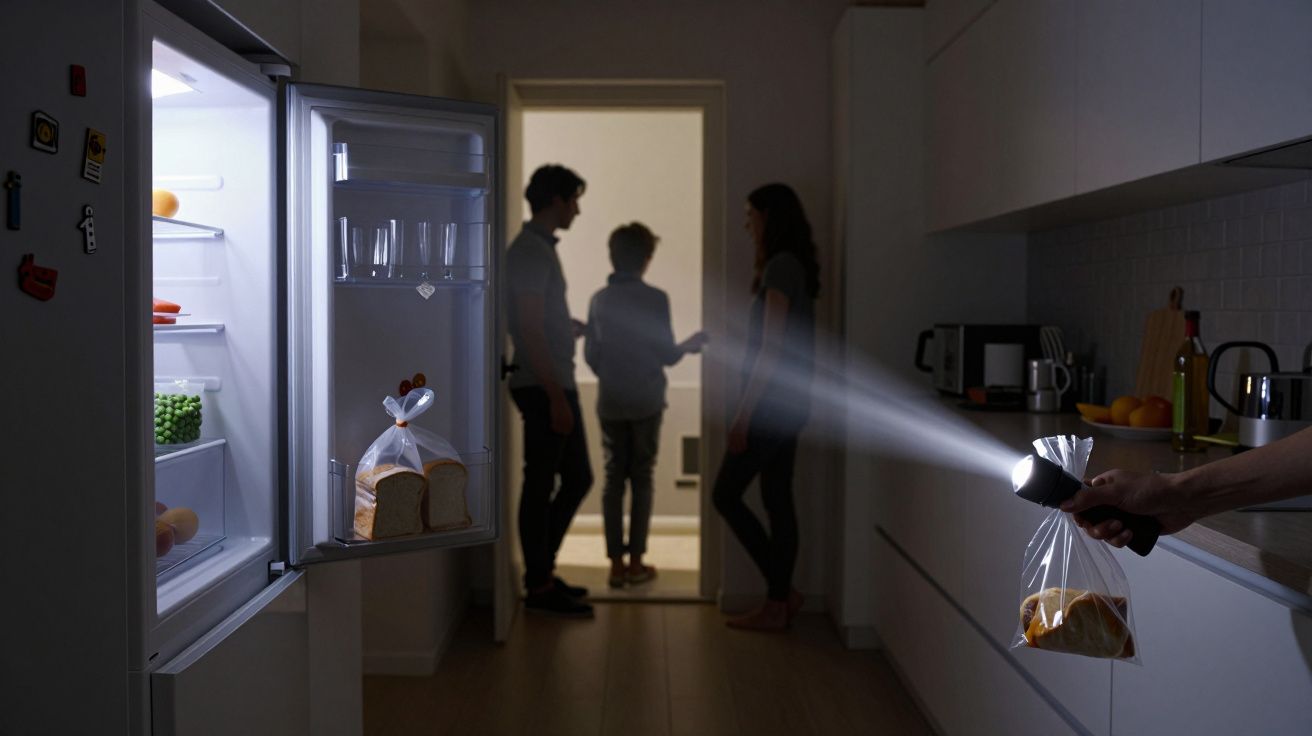
- Pack in freezer bags or wraps with as little trapped air as possible.
- Label with the date and type of bread.
When needed, you can:
- Toast slices straight from frozen.
- Defrost whole rolls at room temperature for 20–30 minutes.
- Refresh crusty loaves in a hot oven for a few minutes to crisp the crust.
This approach slows chemical ageing dramatically while also stopping mould. Texturally, it gives better results than keeping the same loaf in the fridge for a week.
Fridge: a narrow use‑case
There are a few situations where the fridge can be useful, despite its effect on texture:
- You live in very warm, humid accommodation and mould appears within a day or two.
- The bread is for toast only, and you are less concerned about softness.
- You are dealing with speciality, high‑moisture loaves that mould extremely quickly, such as some commercial gluten‑free breads.
In those cases, accept that the crumb will firm up more quickly, and plan to use the bread toasted or grilled, which masks some of the staling.
How to store bread day to day
A few simple habits have a clear effect on how your bread behaves over the week.
Choose the right container
A breathable bread bin or cloth bag lets moisture escape gradually. A tightly sealed plastic bag traps humidity, softening the crust and encouraging mould, especially in warm weather.Keep sliced faces covered
If you store a cut loaf, place the cut side down on a board or wrap that face, as this is where moisture escapes fastest.Avoid the oven top
The area above an oven or near a hob is often warmer and more humid than the rest of the kitchen, speeding both staling and mould.Split and freeze
For a family that eats bread slowly, slice half the loaf and freeze it on day one. Enjoy the other half fresh. This reduces waste and keeps texture consistent.Refresh, don’t rescue
A slightly stale loaf can be revived briefly in a hot oven or a toaster. A very stale, dry loaf is better repurposed as breadcrumbs or croutons.
Simple temperature guide
| Storage place | Typical temperature | Effect on staling |
|---|---|---|
| Freezer | −18 °C or below | Staling largely paused |
| Fridge shelf | ~4 °C | Staling fastest |
| Cool cupboard/bin | 15–20 °C | Moderate, slower than fridge |
How to make the most of bread that has already gone stale
Even if you handle storage well, a loaf will eventually feel past its best. That does not mean it belongs in the bin.
- Turn stale slices into toast, cheese on toast or garlic bread.
- Cube leftovers for salads and soups: panzanella, croutons, ribollita.
- Blitz dry ends into breadcrumbs and freeze for future gratins and coatings.
- Use sturdier stale bread in French toast or bread‑and‑butter pudding, where the custard or egg mixture soaks through and softens the crumb again.
By planning a “second life” for the last portion of each loaf, you reduce waste and take the pressure off storage decisions.
What food scientists recommend in practice
Bringing the chemistry back to everyday kitchen choices, researchers and food technologists tend to converge on a simple message:
- Eat fresh bread within a couple of days, stored at room temperature in a suitable container.
- For anything beyond that, freeze rather than refrigerate.
- Reserve the fridge for extreme conditions, or bread destined for the toaster.
Starch retrogradation and water migration will always nudge bread towards staleness. You cannot stop those processes entirely, but by choosing the right temperature and wrapping, you can slow them enough to enjoy more of the loaf at its best.
If you remember just one rule: room temperature for today and tomorrow, freezer for next week - and the fridge as a last resort.


Comments (0)
No comments yet. Be the first to comment!
Leave a Comment