Why the “five‑second rule” on dropped food is more myth than safety net, microbiologists confirm
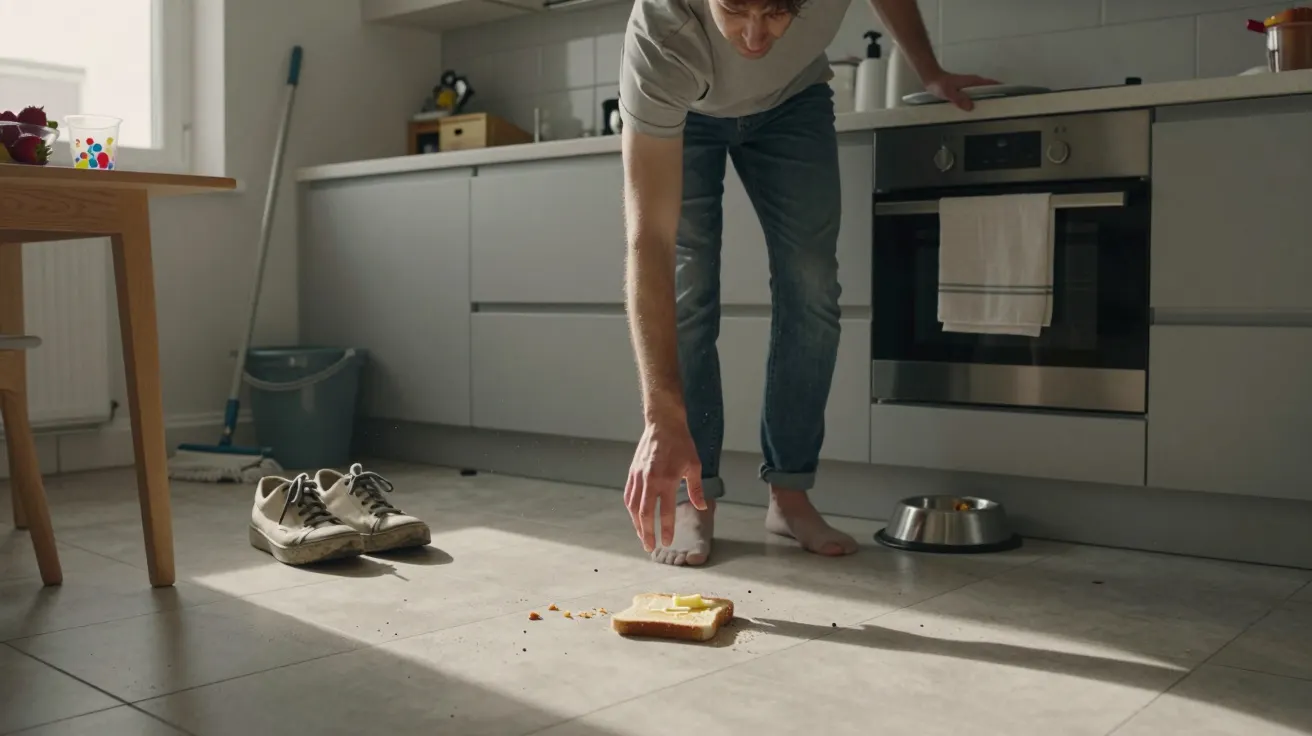
It usually happens in the most ordinary places. Toast slips off the plate on a sleepy Monday, a chip dives off your lap at the cinema, a strawberry rolls off the counter on to the kitchen floor you promise you mopped last weekend. Your brain does the maths in a heartbeat: “It was only there for a second. Five‑second rule. It’s fine, right?”
That quiet, comforting rule has been passed round school canteens, office kitchens and family picnics for years. It sounds almost scientific: a neat little time window where germs supposedly hold back. But when microbiologists put it to the test, the verdict is blunt. Bacteria do not own a stopwatch. They move when there is food, moisture and contact – and that begins in less than a second.
The five‑second rule is less a safety net and more a story we tell ourselves to justify a snap decision between hunger, waste and disgust. The question is not “Was it under five seconds?” but “What did it land on, and who else has walked there today?”
What actually happens when food hits the floor
The moment food touches a dirty surface, there is an opportunity for transfer. Microbes do not wait politely at the edge until a certain time has passed. They sit on shoes, skin, soil and dust, ready to hitch a ride on anything wet or sticky enough to hold them.
In lab experiments, researchers have dropped bread, watermelon, sweets and cooked pasta on surfaces seeded with harmless stand‑in bacteria. Transfer began in under one second, and in many cases the bulk of contamination happened in that first instant. Staying on the floor longer simply gave more microbes time to join the party.
Moist, soft foods act like blotting paper. A slice of cucumber or a bit of melon will pick up far more bacteria than a dry biscuit, even if both land for exactly the same amount of time. Contact is not just about seconds; it is about texture, water and the tiny peaks and pits on both the floor and the food.
Time matters a bit – but surface and food type matter more
Scientists do still measure time in these studies, and there is a pattern, just not the one the playground promised. Longer contact usually does mean more bacteria, if there are bacteria to begin with and if the food can hold them. But the curve is steep at the start, then flattens. The jump from one to five seconds is not the difference between “safe” and “doomed”; it is the difference between “already contaminated” and “a bit more contaminated”.
More important are three questions:
- What kind of surface did it land on?
- What type of food is it?
- How dirty was that spot before you dropped anything?
A clean, dry kitchen worktop wiped recently is very different to a sticky café floor or a patch of pavement outside a station. A hard boiled sweet is very different to a damp piece of chicken. The five‑second rule lumps all of these into one bucket. Microbes do not.
Quick comparison
| Factor | Safer end of the scale (relatively) | Higher‑risk end of the scale |
|---|---|---|
| Surface | Recently cleaned, dry worktop | Pavement, soil, public transport floors |
| Food | Dry, hard, low moisture (plain biscuit) | Wet, soft, high moisture (fruit, meat, pasta) |
| Place | Low‑traffic home area | Busy public or shared spaces |
Why our brains like the rule more than our stomachs do
The five‑second rule survives partly because it solves a social and emotional problem, not a microbiological one. Watching a £4 pastry or the last crisp in the bag hit the floor triggers three things at once: a pang of waste, a flicker of embarrassment if others are watching, and a faint sense of “Surely it’s not that bad?”
In that moment, a simple rhyme – “five‑second rule!” – cuts through uncertainty. It lets you act quickly and feel vaguely backed by “common sense”. No one wants to picture invisible faecal bacteria from someone’s shoes hopping on to their toddler’s rice cake. It is less stressful to believe there is a magic window where nature pauses.
There is also a class and shame angle we rarely name out loud. People who grew up with little money, or in homes where food waste was not an option, may feel judged for either choice: eat it and you are “gross”, bin it and you are “ungrateful”. A made‑up rule feels gentler than that harsh choice, even if it does nothing to actually change the microbial load.
When eating off the floor becomes genuinely risky
Most healthy adults will not end up in hospital because they ate a single crisp that skidded briefly across a clean kitchen tile. The occasional low‑level exposure to everyday microbes is part of life. Problems arise when you mix the wrong bug with the wrong person and the wrong food.
High‑risk foods are the ones that already demand care in the fridge or on a buffet table: cooked meats, eggs, dairy, cut fruit, rice and pasta. They offer moisture and nutrients in a form that certain bacteria, like Salmonella, E. coli and Listeria, love. If even a few of these get a foothold, they can multiply quickly once the food is back in warm hands or a packed lunch box.
High‑risk people include:
- Children under five
- Pregnant women
- Older adults
- Anyone with a weakened immune system or chronic illness
For them, the dose of bacteria needed to cause illness can be much lower. A dropped chicken nugget on a pub floor is not the same as a dropped breadstick in your own sitting room, even if both obey the mythical “count to five”.
A more honest “rule”: know your floor, know your food
There is no catchy time limit that can guarantee safety, but there are some low‑effort habits that tilt the odds your way without turning every snack into a science lesson. Think of them as a quiet upgrade to the old rule, based on real‑world risk rather than wishful counting.
- At home, on a visibly clean surface, with a dry food: a crisp, a bit of toast, a plain biscuit that lands briefly on a swept, mopped floor is unlikely to be your undoing if you are otherwise healthy. If it looks clean and you are comfortable with the idea, the risk is low – though never truly zero.
- At home, with wet or sticky foods: anything that would go slimy if left out – fruit, cooked veg, meat, cheese, cake with icing – picks up more germs more quickly. If it hits the floor, especially near bins, shoes or pet bowls, treat “bin it” as the default.
- In public or shared spaces: cafés, trains, offices, school corridors and pavements are where hundreds of shoes, spills and coughs have passed. Here, the safest “rule” is simple: once it hits the floor, it is food for the bin, not you.
If you find yourself hovering, torn between thrift and caution, use a mental tie‑breaker: “Would I be comfortable feeding this to a toddler or someone pregnant?” If the honest answer is no, you have your decision.
Cleaning floors counts more than counting seconds
One thing the five‑second myth does get half‑right is that the background state of your environment matters. You cannot control every germ in your life, but you can quietly starve the dirtiest ones of easy opportunities.
Regular sweeping and mopping – especially around cooking and eating areas – cuts down the general layer of bacteria, soil and food bits available to be transferred. Wiping up spills when they happen stops sticky patches turning into microbial magnets. Keeping pet feeding zones away from children’s snack spots reduces the chance that something lands in yesterday’s dribble of dog food.
None of this needs to be heroic or constant. It can be as mild as:
- Quick sweep or hoover around the table a few times a week
- Mop or wipe the kitchen floor when you already have hot water out
- Extra attention near bins, toilets and pet areas
These dull, repeating actions shift the whole baseline down. That way, the odd dropped cracker on a normal Tuesday is less likely to cause a drama, not because of the seconds you count, but because of the germs that were not there in the first place.
How to talk about the rule without becoming “that person”
Once you know the science, it can be tempting to swat down every “five‑second rule!” joke with a full lecture on bacterial transfer rates. That rarely goes down well over lunch. There is a softer way to share the information without sounding like a walking warning label.
You can keep it light: “Apparently the germs don’t wait for a stopwatch – it’s more about how wet the food is and where it landed.” Or, if a child asks, frame it as a choice: “Floors where lots of people walk can have poo germs on them, even if we can’t see them. Let’s get you a clean one instead.”
The point is not to spark panic about every crumb, but to retire the false comfort of a rhyme that never matched reality. Most of us can handle the idea that sometimes, throwing something away is simply the kinder option for our gut.
FAQ:
- Is the five‑second rule ever true? Not in the strict sense. Microbes transfer in under a second. The “rule” is really a social habit, not a scientific one.
- So if I eat dropped food, will I definitely get ill? No. Most of the time, nothing dramatic happens, especially if you are healthy and at home on a clean floor. The risk is there, but it is usually low and invisible – until it is not.
- Is carpet safer than hard floors? Carpet can trap dirt deeper, so sometimes fewer bacteria move to dry foods in lab tests. In real life, carpets also hold dust, skin flakes and pet hair. It is not a free pass.
- Can I “fix” dropped food by rinsing it? A quick rinse may remove visible dirt but will not reliably wash away all bacteria, especially from porous or soft foods. Cooking it again thoroughly is safer, but rarely practical for small snacks.
- What is a better rule of thumb than five seconds? Think “place, food, person”: where did it land, what is it made of, and who is about to eat it? If any of those answers make you hesitate, the bin is the wiser choice.


Comments (0)
No comments yet. Be the first to comment!
Leave a Comment